The Meaning of the Van Cleef & Arpels Alhambra Clover
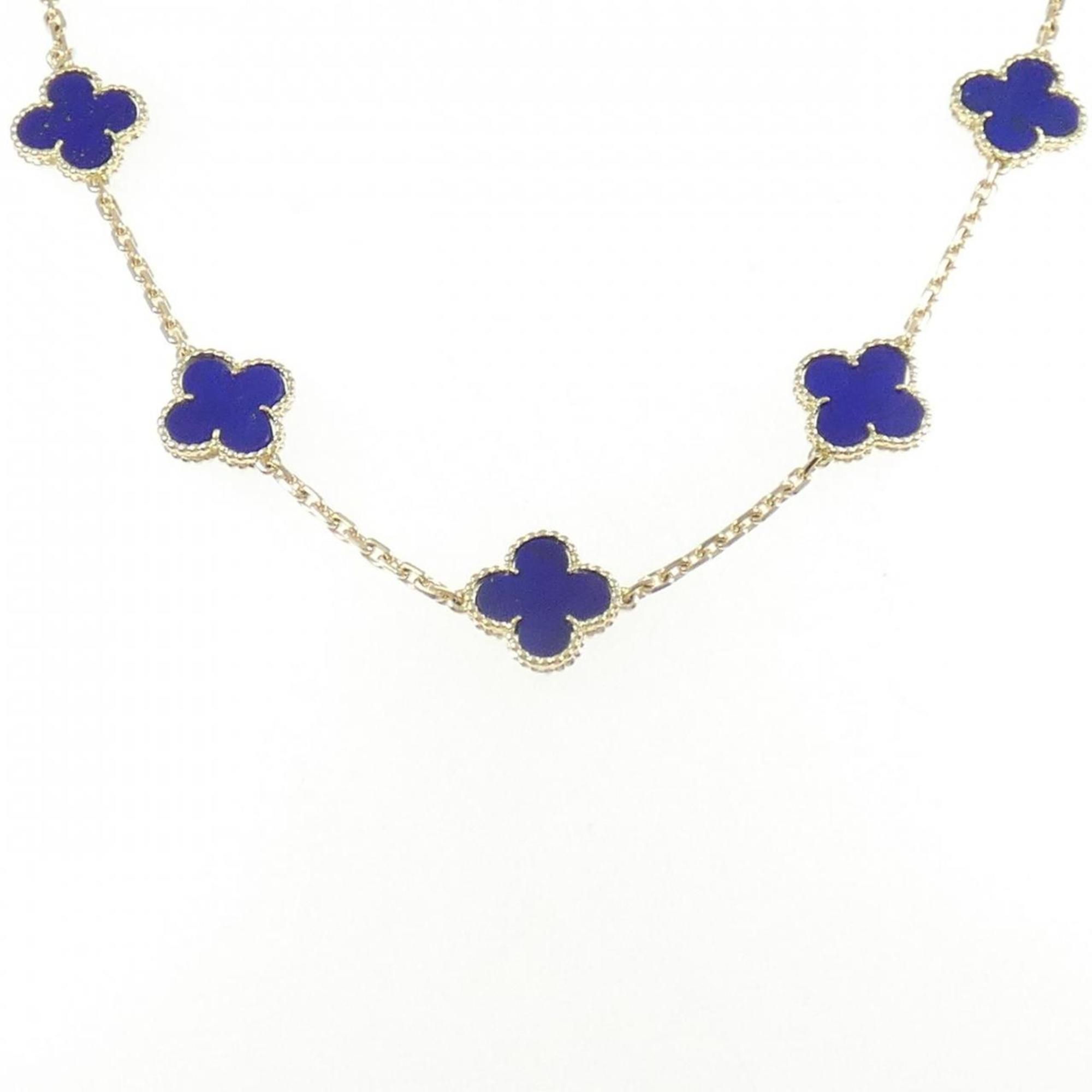
The Alhambra motif is a quatrefoil — a four-lobed clover shape edged with a border of fine gold beads. Van Cleef & Arpels associates it with luck and good fortune, framing the four-leaf clover as a personal talisman. The shape is borrowed from the architecture of the Alhambra palace in Granada, which is where the collection gets its name.
It is one of the most recognised motifs in all of fine jewellery. Here is what it actually means, and why that meaning has kept it loved for more than fifty years.
Where the name comes from
Van Cleef & Arpels launched the Alhambra in 1968. The collection is named after the Alhambra palace in Granada, in southern Spain — one of the great masterpieces of Moorish architecture, where the quatrefoil appears again and again in the tilework and stone. The maison took that four-lobed form, softened it into a clover, and finished its edge with a border of tiny gold beads — now one of the surest signs of a genuine Alhambra.
What the clover is meant to mean
Van Cleef & Arpels frames the Alhambra as a symbol of luck. The four-leaf clover is one of the oldest good-luck charms in the Western tradition, and the maison presents the motif as a personal talisman. The popular reading of the four leaves draws on long folk association:
| The four leaves are popularly associated with | Meaning |
|---|---|
| Faith | Belief and constancy |
| Hope | Looking forward with optimism |
| Love | Affection and connection |
| Luck | The rare good fortune of the fourth leaf |
(This faith–hope–love–luck reading is the traditional folklore of the four-leaf clover that the design evokes, rather than a fixed brand definition; Van Cleef & Arpels speaks of the motif chiefly as a symbol of luck.)
Why the meaning matters to how it is worn
This is the heart of the Alhambra’s appeal. It is a piece worn for its meaning rather than for show — light enough to live in every day, recognisable to those in the know, and easy to layer or pass down. Ladies buy it for themselves to mark a milestone, give it as a token of affection, and hand it on as a quiet heirloom.
From symbol to icon
Because the motif has been in continuous production since 1968, it has become part of the language of fine jewellery. The single-motif pendant and the five-motif bracelet are the most familiar expressions. The meaning stays constant — part of why the Alhambra holds its value so well. For what the pieces are worth pre-owned, see how much a Van Cleef Alhambra is worth, and our pre-owned Van Cleef & Arpels buying guide.
Buying with confidence
Because the Alhambra is so widely copied, a few details separate the real thing: crisp VCA hallmarks, a serial number, the correct beaded edge around each motif, and hardstones set cleanly without gaps. Chrono6538 authenticates every piece before it is offered.
Frequently asked questions
What does the Van Cleef Alhambra clover mean?
It is a quatrefoil — a four-lobed clover shape with a beaded gold edge — that Van Cleef & Arpels associates with luck, drawn from the architecture of the Alhambra palace in Granada.
Why is the Alhambra called Alhambra?
After the Alhambra palace in Granada, where the quatrefoil appears throughout the Moorish tilework. The collection launched in 1968.
Is the Alhambra a four-leaf clover?
It reads as one, and the maison embraces that, but the underlying shape is a quatrefoil from Moorish and Gothic architecture.
Why is the Van Cleef Alhambra so expensive?
Tightly controlled supply and regular retail increases, genuine hand-finishing, and a timeless design in continuous production since 1968.
Heritage details reflect publicly documented history and Van Cleef & Arpels’ own framing of the motif. Written by Justin Williams, founder of Chrono6538.