Last updated: July 2026.
The Comète is the piece a lady buys to mark something only she needs to know about — a shooting star she can wear on an ordinary Tuesday and read her own meaning into. It is the oldest idea in Chanel jewellery, straight from Gabrielle Chanel’s 1932 diamond collection, and it stays quiet in the way she liked: a single star, sometimes with a diamond tail curving round the neck. Pre-owned, it is more reachable than you might expect — as of July 2026 the diamond Géode star studs sit around £3,000–£4,000 as an asking price, roughly a third under boutique. It is a self-possessed piece for a self-possessed lady, and it was designed by one.

Where does the Comète come from?
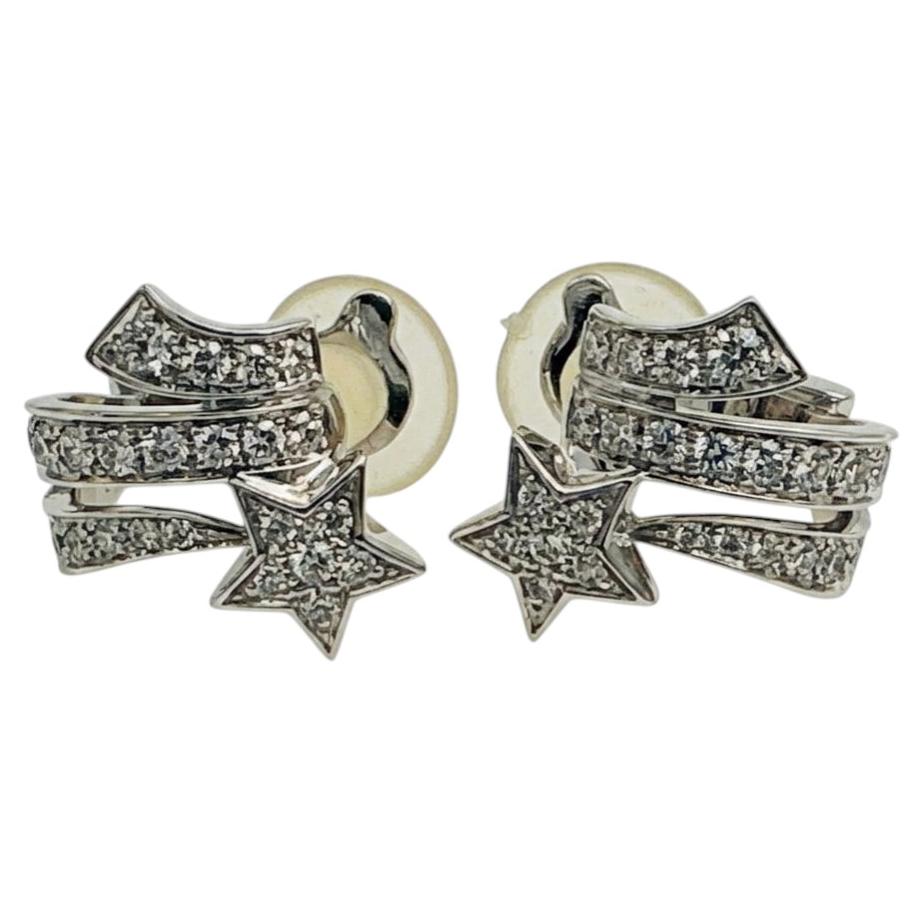
In November 1932, at her apartment at 29 rue du Faubourg Saint-Honoré in Paris, Coco Chanel unveiled Bijoux de Diamants — the only fine-jewellery collection she designed in her lifetime. It was commissioned, of all things, to revive diamond demand during the Depression, and she answered with about fifty pieces in platinum and gold built on celestial and decorative themes: the fringe, the feather, the ribbon, the sun and the stars. She refused clasps — her necklaces were meant to pour on and drape open — and the star, the comète, was the signature: a single shooting star with a long diamond tail that curved around the throat and stayed open at the front. Most of the 1932 originals were later dismantled, which is part of why the motif carries such cachet: it lived mostly in the archive until Chanel began building on it again.
For the collection’s 80th anniversary in 2012, Chanel launched its “1932” high-jewellery line under Patrice Leguéreau, and the Comète has been an ongoing part of the fine-jewellery offer since. The modern Étoile Filante necklace is the clearest heir to the 1932 idea — still clasp-less, with a removable star that doubles as a brooch.
How much is a pre-owned Chanel Comète worth?
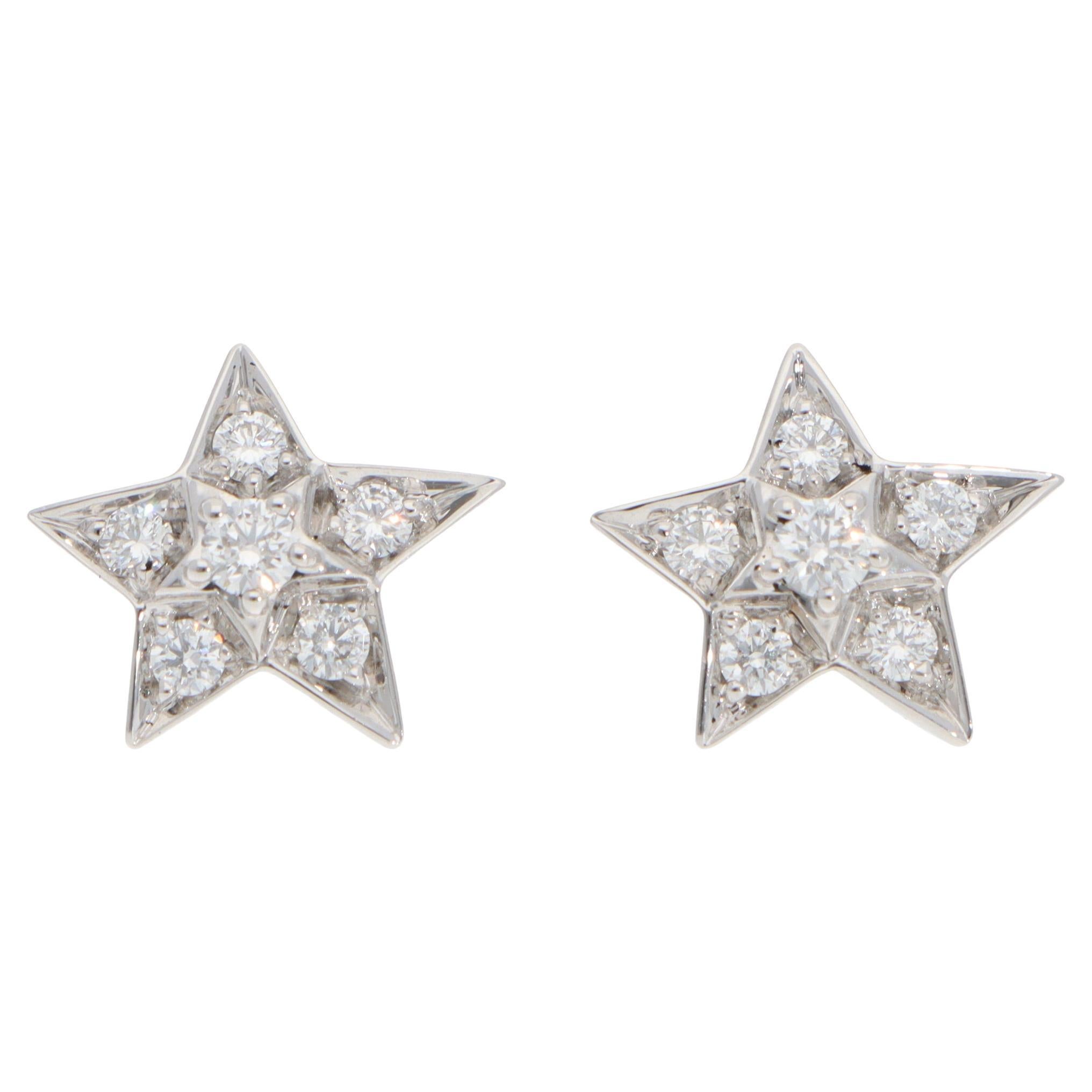
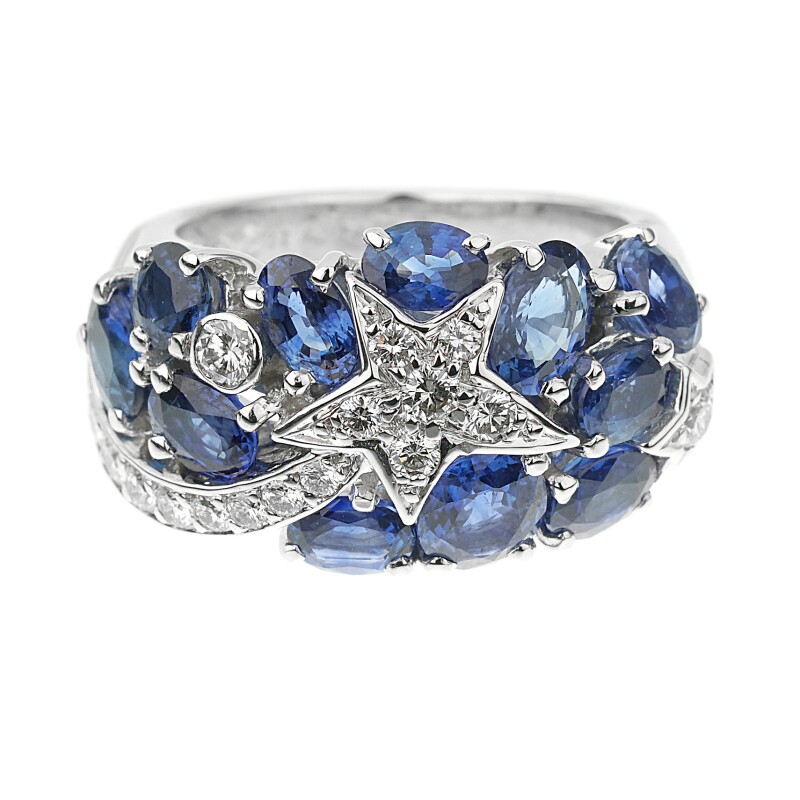
Be honest about the market first: Comète is a small, slow-turning line, not a standardised one like the Cartier Love or the Van Cleef Alhambra. Good pieces surface intermittently and sell, so treat what follows as guide ranges rather than a busy price board. The most repeatable segment — and the sensible entry — is the Géode diamond star studs in white gold, around £3,000–£4,000 pre-owned against roughly £5,850 at the boutique. Rings are the widest spread, because “Comète” covers everything from a slim shooting-star band to a sapphire-and-diamond cocktail piece; the average asking sits near £4,700, with gem-set examples running into five figures. A true Comète necklace — the star-and-tail or a Géode design — tends to fall around £4,500–£6,000 depending on gold colour and diamond weight.
One thing to watch when you shop: several “Comète” listings are actually the related star lines Étoile Filante and Bulle de Ciel. Only the shooting-star motif is Comète proper, so match the design, not just the word.
A guide to pre-owned Comète values (UK, July 2026)
| Piece | Material / configuration | Guide range (asking, Jul 2026) |
|---|---|---|
| Comète Géode star studs — entry | 18k white gold + diamond | ~£3,000–£4,000 |
| Comète ring — slim shooting-star band | 18k white/yellow gold + diamond | ~£2,800–£5,500 |
| Comète ring — gem-set cocktail | 18k gold + sapphire / diamond | ~£8,000–£35,000 |
| Comète necklace (star-and-tail / Géode) | 18k gold + diamond (± ceramic) | ~£4,500–£6,000 |
| Étoile Filante earrings (modern heir) | 18k white gold + diamond | ~£3,500–£7,000 |
Figures are dealer asking prices as of July 2026, several converted from US and European listings and therefore indicative; the secondary market is thin, so read these as guide ranges, not a liquid market. They are wider open-market figures, not Chrono6538’s prices — Chrono6538 sells authenticated, guaranteed pieces at a premium to the private-market floor. Segment by piece and gemstone; a slim diamond band and a sapphire cocktail ring are not the same market.
Will it suit me, and where should I start?
Comète suits a lady who wears fine jewellery for herself and likes a little poetry in it — a star is quieter than a logo and says more. The Géode studs are the natural first piece: small, wearable every day, and the fastest way to know whether the motif feels like you before you commit to a ring or a necklace. Because supply is intermittent, buy the right piece when you see it rather than waiting for a cheaper one; boxed, hallmarked examples with paperwork are worth the small premium and much easier to live with.
Whatever you choose, it should be authenticated, guaranteed, and yours to love — a marker you set for yourself. See the fine jewellery at Chrono6538 →
This piece describes how the Comète has held its value in the wider market; it is not investment advice, and values can fall as well as rise.