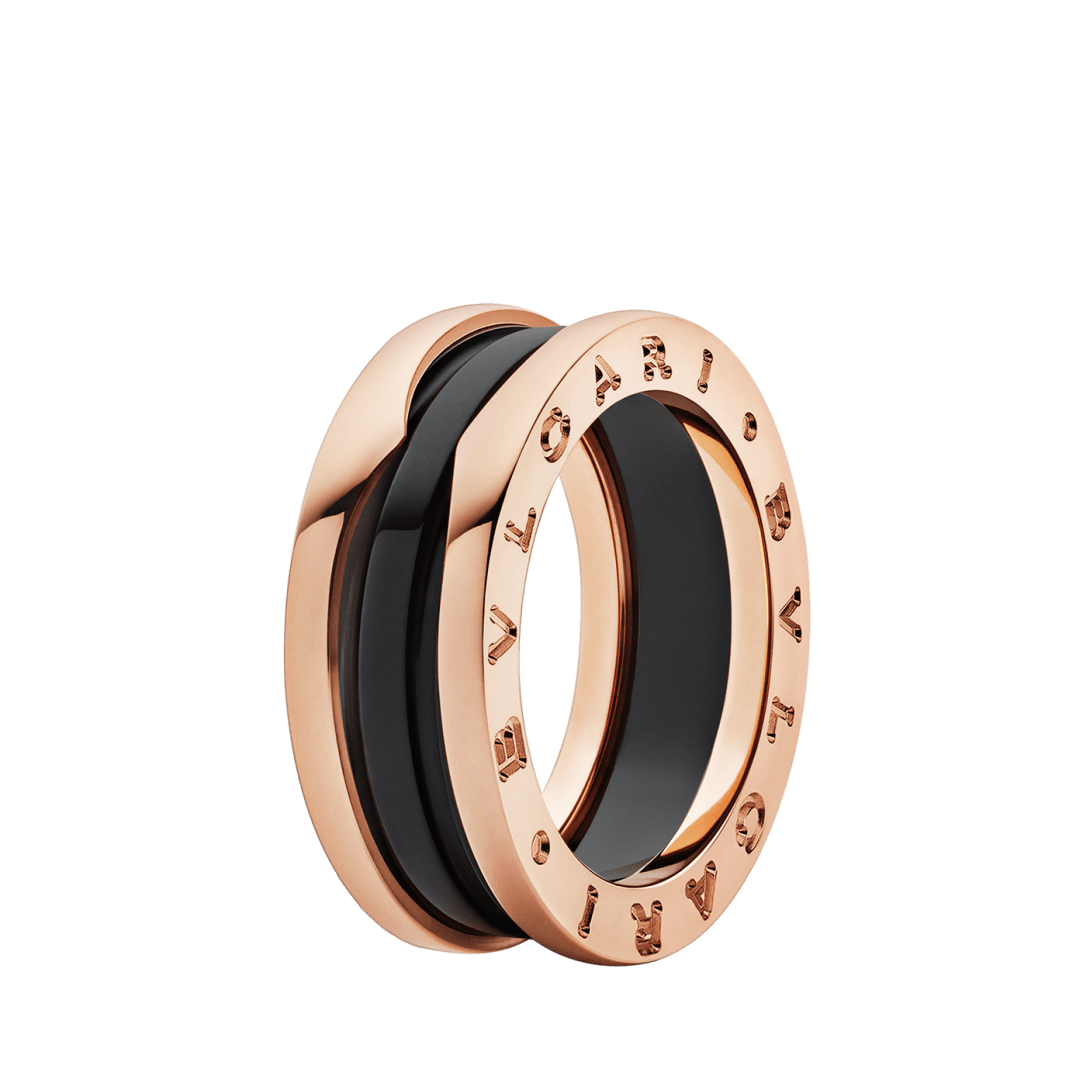
These are the two rings a lady reaches for when she wants a signature she can stack and wear every day, and she usually buys it for herself. The Bulgari B.zero1 is Roman architecture on the finger, a spiral borrowed from the Colosseum; the Cartier Trinity is three interlaced bands that have carried a quiet meaning for a century. Pre-owned, a single-band B.zero1 sits around £700 to £1,400 and a small three-gold Trinity around £750 to £1,100 as of July 2026, so the two start in almost the same place and then go their separate ways.
Roman spiral or three-band meaning
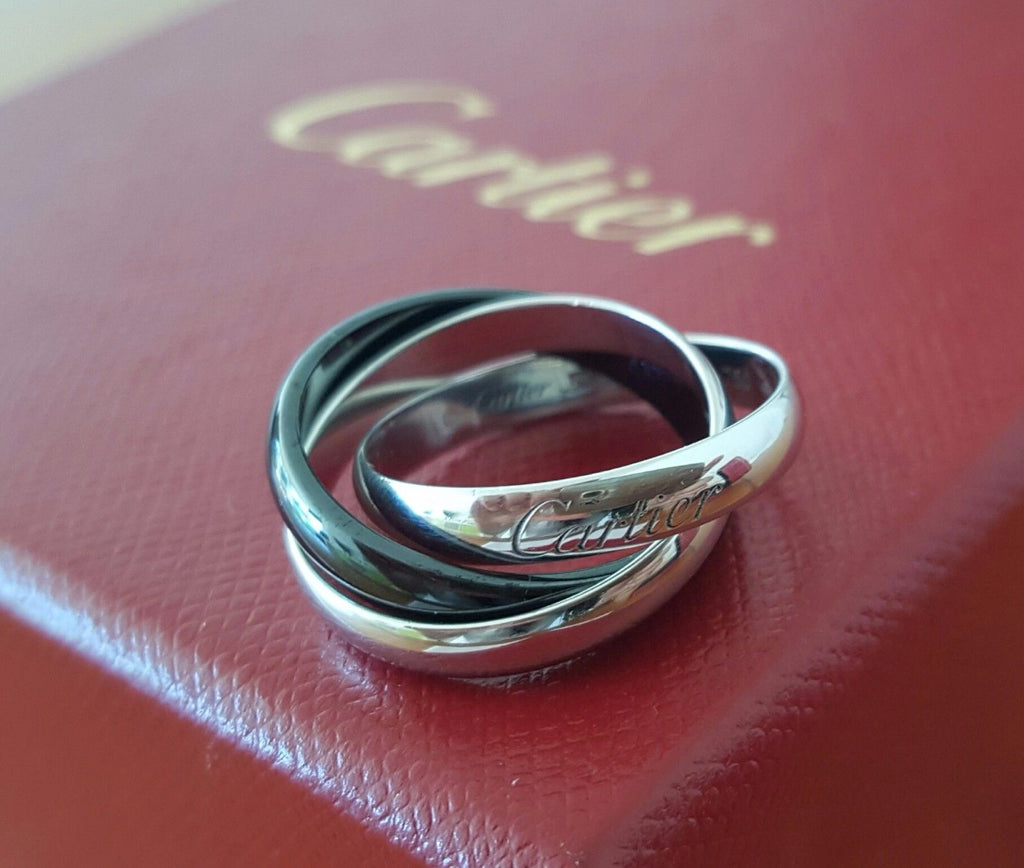
The B.zero1 is Bulgari at its boldest: designed in the late 1990s, its stacked bands spiral outward with the double logo pressed round the rim, unmistakably modern and a little bit architectural. The Cartier Trinity is the older romantic: rose, yellow and white gold interlaced, read as love, fidelity and friendship, and worn stacked by Jean Cocteau in the 1920s. One is a piece of design you wear; the other is a piece of meaning you keep.

How much does each cost pre-owned?
Both run from a slim band up to a diamond version, so the honest read is piece for piece. Here is where they sit on the UK pre-owned market as of July 2026.
| What you are buying | Bulgari B.zero1 (pre-owned, Jul 2026) | Cartier Trinity (pre-owned, Jul 2026) |
|---|---|---|
| Entry gold ring | 1-band ring, ~£700–£1,400 | small three-gold ring, ~£750–£1,100 |
| Fuller gold ring | 3–4 band ring, ~£1,300–£2,600 | classic to large three-gold, ~£1,200–£3,000 |
| With ceramic / mixed | 2-band gold + ceramic, ~£1,000–£1,700 | white gold + ceramic, ~£1,600–£5,200 |
| Diamond ring | pave ring, ~£2,500–£4,100 | diamond-paved ring, ~£6,000–£8,000 |
| Gold bracelet | bracelet, ~£900–£2,000 | cord / three-gold, ~£1,500–£3,000 |
They open almost level, a plain band of either is under £1,400, but the Trinity climbs faster. Its ceramic and diamond versions cost noticeably more than the equivalent B.zero1, partly because a diamond-paved Trinity is a bigger, more worked piece and partly because Cartier simply commands more. If you want the most ring for the money, the B.zero1 is the value choice at almost every step; if you want the heritage and the three-gold trick that goes with everything, the Trinity is worth the difference.
Which suits how you actually live?
Choose the B.zero1 if you want a ring with real presence that still reads as contemporary, and if you like something instantly recognisable as Bulgari. Choose the Trinity if you like mixing metals and want a piece that quietly means something, one that sits happily next to the rose, yellow and white gold you already own. Both are made to stack, both wear every day, and both look best worn casually rather than saved for best.

Buying either one pre-owned
Both have held their value steadily, which describes how they have behaved rather than being investment advice, and values can move either way. Whichever suits you, buy a piece that has been authenticated, checked and guaranteed, so it is simply yours to enjoy. You can see our authenticated pre-owned Bulgari and Cartier pieces to compare them in person.
Last updated July 2026. Figures are pre-owned asking prices from the wider UK market, shown as a guide by metal and configuration, not Chrono6538’s own prices; we sell authenticated, guaranteed pieces at a premium to the bare private-market floor. This is not investment advice.