What are your consumer rights when buying second-hand luxury in the UK?
Buy a pre-owned watch or piece of fine jewellery from a UK business and the Consumer Rights Act 2015 gives you satisfactory quality, fitness for a purpose you named, conformity with the description, and 30 days to reject it outright for a full refund. Buy from a private individual and almost all of that falls away, leaving one right that still bites: it must match the description you were given.
General information about UK consumer law, current at 21 August 2026 — not legal advice. For your own purchase, contact the Citizens Advice consumer service.
That distinction costs buyers more than any other point of law here, and most people meet it only after something has gone wrong. Every point below is checked against the legislation itself, with sources at the foot.

Trader or private seller: the line where buyers lose money
The Act governs contracts between a trader (anyone acting for purposes relating to their trade, business, craft or profession) and a consumer. Section 2 puts the burden on the seller to prove you were not acting as one.
A genuine private sale falls under the Sale of Goods Act 1979 instead, and section 14 implies a satisfactory quality term only where the seller sells goods in the course of a business. What survives is section 13, that goods sold by description must correspond with it, and section 12, that the seller had the right to sell them. So establish whether you are dealing with a business before you pay: on a marketplace the platform is rarely the seller.
| Your position | Business or dealer | Private seller | Marketplace listing |
|---|---|---|---|
| Satisfactory quality | Yes (CRA s.9) | No | Only if a business |
| Fit for a purpose you named | Yes (s.10) | No | Only if a business |
| Matches the description | Yes (s.11) | Yes (SoGA s.13) | Yes, either way |
| Has the right to sell it | Yes (s.17) | Yes (SoGA s.12) | Yes, either way |
| 30-day right to reject | Yes (s.22) | No | Only if a business |
| 14-day distance cancellation | Yes, if bought at a distance or off-premises | No | Only if a business |
| Can it be contracted out of? | No, s.31 voids such terms | Nothing to exclude | Platform cover is policy only |
What “satisfactory quality” means on a forty-year-old watch
Second-hand resets the standard rather than removing it. Section 9(2) asks what a reasonable person would consider satisfactory taking account of the description, the price, and all the other relevant circumstances. Section 9(3) names durability, freedom from minor defects, appearance and finish as aspects of quality.
Two carve-outs matter. Section 9(4)(a) excludes anything specifically drawn to your attention before the sale; section 9(4)(b) excludes anything an examination you actually made ought to have revealed. A dealer who photographs a scratched bezel has dealt with it. An eighties Datejust with soft edges from an old polish is very likely satisfactory; the same watch stopping dead in a fortnight is not.
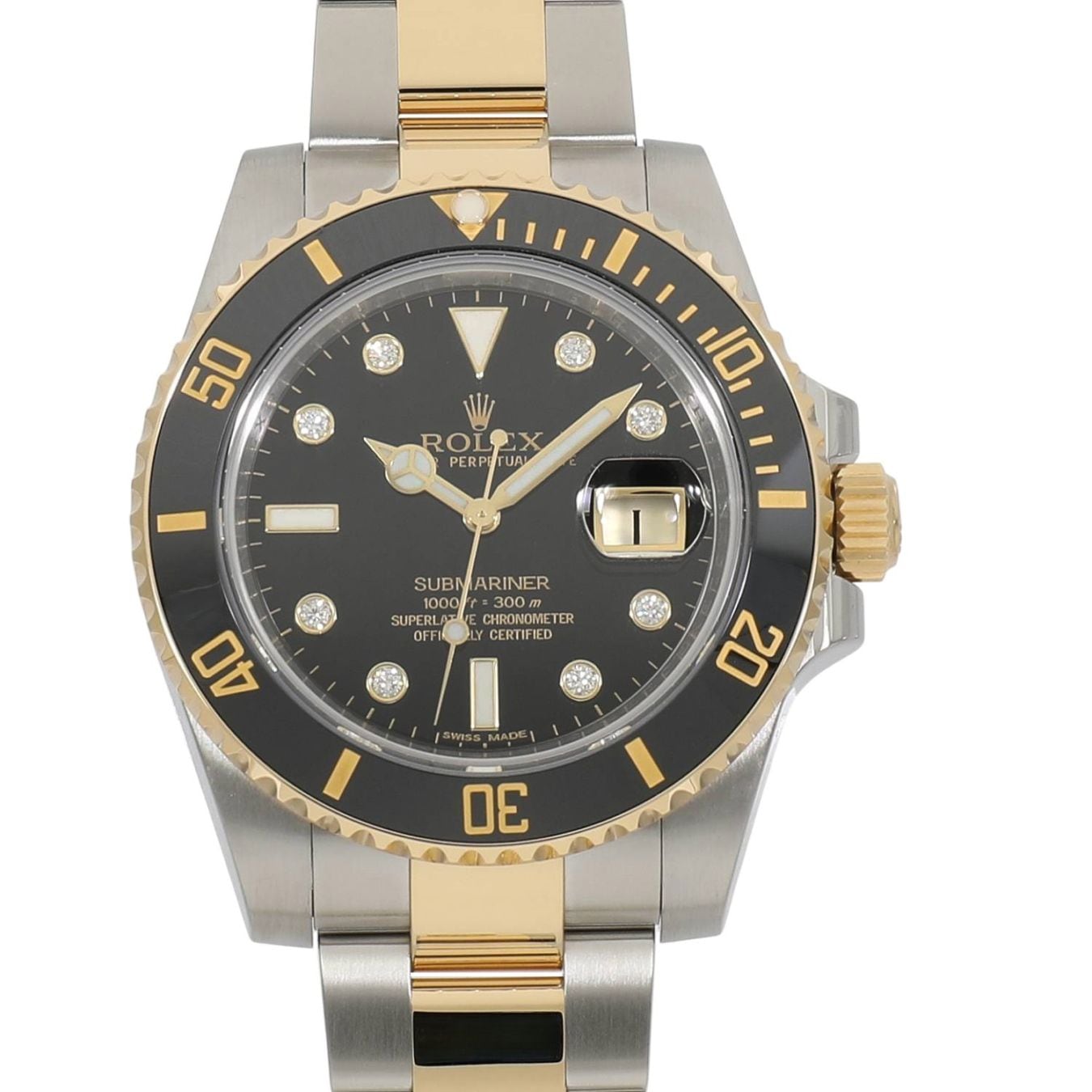
What “serviced”, “box and papers” and “original dial” commit a seller to
Section 11(1) requires goods supplied by description to match it, and section 11(4) goes further: information a trader gave you before the sale about the main characteristics of the goods is treated as a term of the contract, unchangeable later without your agreement (section 11(5)).
- “Recently serviced” is a contract term, not sales patter. If it was not serviced, that is a breach whatever else is right.
- “Box and papers” describes what you are buying. Papers belonging to another reference are a breach, like a missing bracelet link.
- “Original dial”, “unpolished”, “all factory parts”. A redial or aftermarket bezel insert breaches the description, whether or not the watch keeps time.
- Aftermarket parts nobody mentioned. Against a business you fall back on section 9: a reasonable buyer at that price would not expect substituted components without being told. Against a private seller who said nothing you usually have no claim, because a private seller may omit information though not misdescribe.
- A missing service history entitles you to nothing on its own. It bites only if the seller claimed there was one, the commonest misunderstanding here.
- A counterfeit is the clearest breach of description there is, and a stolen piece also breaches section 17, that the trader had the right to sell it.
None of it can be signed away. Section 31 makes terms excluding or restricting liability under sections 9 to 17 not binding on you, and catches terms hanging a remedy on an onerous condition. “Sold as seen, no returns” on a dealer’s invoice has no effect on your statutory rights.
Your remedies, in the order the Act puts them
| When | What you can insist on | Who proves what |
|---|---|---|
| First 30 days | Short-term right to reject: hand it back, full refund, no repair attempt required. The trader bears the reasonable cost of return, unless you take it back in person to where you collected it, and refunds within 14 days of accepting the rejection. | You. The six-month presumption does not reach this stage. |
| After 30 days | One repair or one replacement, within a reasonable time and without significant inconvenience, at the trader’s cost. | For six months from delivery the fault is presumed present on day one unless the trader disproves it (s.19(14)). |
| If that fails | A price reduction, or the final right to reject. One or the other, not both. | As above, for the first six months. |
| On a final rejection | Refund, reducible for your use, but not if you reject inside the first six months. The Act’s only general exception is motor vehicles. | — |
Agreeing to a repair inside the 30-day window stops the clock for the waiting period (section 22(6)). The presumption has a limit: section 19(15) disapplies it where the goods did conform on delivery, or where it is incompatible with the nature of the goods or the way they fail. A crystal cracked by a knock is not a presumed latent defect.

The 14-day online cancellation right is a separate thing
The Consumer Contracts (Information, Cancellation and Additional Charges) Regulations 2013 give a right to cancel that has nothing to do with anything being faulty. It covers distance and off-premises contracts only, so buying in a shop is outside it, and it ends 14 days after the goods reach you, or 12 months later if the trader never gave you the required cancellation information. You get everything back including basic delivery. The catch for luxury goods is regulation 34(9): the trader may deduct for value lost through handling beyond what a shop would allow. Trying a bracelet on for size is fine; a fortnight on the wrist is not. One asymmetry to note: on a cancellation you normally pay the return postage yourself, unless the trader agreed otherwise or never told you about the right — unlike a rejection for a fault, where the trader pays.
Auctions and second-hand goods sit partly outside the Act
This exception is in the Act itself. Section 2(5) says a person is not a consumer, for the goods chapter, where the goods are second-hand goods sold at public auction and individuals have the opportunity of attending in person. Satisfactory quality, fitness, the description term in section 11(1) and the right to reject all drop away; section 2(6) preserves only sections 11(4) and (5), 12, 28 and 29. The 14-day right also excludes contracts concluded at a public auction (regulation 28(1)(g)), which regulation 5 defines as requiring consumers to attend or be able to attend in person. The exception is narrower than it sounds: it turns on people being able to attend in person, so a sale conducted purely online does not meet it and the usual rights apply. Where these bite, the auctioneer’s conditions of sale are what you have, so read them before bidding.

Paying by credit card gives you a second seller
Section 75 of the Consumer Credit Act 1974 makes your card issuer jointly and severally liable with the seller for misrepresentation or breach of contract, where the cash price is more than £100 and not more than £30,000. Three points the Financial Ombudsman Service is explicit about:
- It is the cash price of the goods that counts, not what you put on the card. A £200 deposit on an £8,000 watch brings the whole purchase in.
- It covers credit cards and point-of-sale loans, not debit cards, charge cards, overdrafts or bank transfers.
- Above £30,000 section 75 stops, and section 75A does not fill the gap for a credit card — it applies only to point-of-sale finance taken out to fund that specific purchase, and only after you have tried the seller. So protection thins exactly where the piece is most valuable.
Chargeback is the fallback and works on debit cards, but it is not a legal right. The Financial Ombudsman Service calls it a voluntary set of card-scheme rules, with the scheme deciding the outcome and a limit usually around 120 days.
How long your rights last
The Act applies across the United Kingdom, but the deadline for suing on a contract is set separately and differs: six years in England and Wales (Limitation Act 1980, section 5), six years in Northern Ireland (Limitation (Northern Ireland) Order 1989, article 4), and five years in Scotland under the negative prescription in section 6 of the Prescription and Limitation (Scotland) Act 1973. Those are outer limits for going to court, not a warranty, and past six months you must show the fault was there at delivery.

Make the description do the work
In the years I have been selling these watches, nearly every dispute I have seen has started the same way: a listing written vaguely enough that the seller could later deny meaning anything by it. Pin it down before you pay. Ask in writing for the reference and serial, whether the case has been polished, whether dial and hands are factory, and when it was last serviced. A business that answers by email has written the contract terms it will be held to under section 11(4).
Every piece at Chrono6538 is inspected, authenticated, described as it actually is and issued with a Certificate of Authenticity. We sell as a business, so the Consumer Rights Act applies in full. Once you know what the law already guarantees you, the only thing left to settle is the price, and it is worth understanding how much room there really is to negotiate before you ask. Browse authenticated pre-owned Rolex and Omega watches, or read our guide to buying fine jewellery online with confidence.

Frequently asked questions
Do I have consumer rights when I buy a second-hand watch in the UK?
From a business, yes, and they are the same rights you would have buying new; section 9(2) simply weighs age, description and price in deciding what is satisfactory. From a private seller the quality and fitness terms do not apply.
How long do I have to return a faulty pre-owned watch?
Thirty days from the day after delivery and transfer of ownership, for the short-term right to reject and a full refund. The trader bears the reasonable cost of return, unless you take it back in person to where you collected it, and refunds within 14 days of accepting the rejection. Agreeing to a repair pauses the clock.
Can a dealer sell a watch “as seen” with no returns?
Not against your statutory rights: section 31 makes any term excluding or restricting a trader’s liability under sections 9 to 17 not binding on you. A private seller differs, because those terms were never implied at all.
Does the 14-day cooling-off period apply?
If you bought at a distance or off-premises from a trader, yes, and you need no reason. It runs 14 days from the day the goods reach you, or 12 months longer if the trader never told you about it. In-shop purchases and public auctions are outside it.
What if the watch has a replacement dial or aftermarket parts?
If it was sold as original, unpolished or all-factory, that breaches the description term and your remedies run as normal. If nothing was said you fall back on satisfactory quality against a business; against a silent private seller you usually have no claim.
Sources
- Consumer Rights Act 2015, ss. 2, 9, 10, 11, 17, 19, 20, 22, 23, 24, 31.
- Consumer Contracts Regulations 2013, regs. 5, 27, 28, 30, 31, 34.
- Sale of Goods Act 1979, ss. 12, 13, 14.
- Consumer Credit Act 1974, s. 75; FOS on s.75 and chargeback.
- Limitation Act 1980, s. 5; Limitation (Northern Ireland) Order 1989, art. 4; Prescription and Limitation (Scotland) Act 1973, s. 6.
- Citizens Advice: misdescribed goods from a private seller.
General information about UK consumer law as at 21 August 2026, not legal advice, and it does not cover every situation. For your own purchase, contact the Citizens Advice consumer service or a solicitor. Prices shown are asking prices on chrono6538.com on 21 August 2026. Written by Justin Williams, founder of Chrono6538.