Three bands of rose, yellow and white gold, rolling over one another on the finger — the Trinity is one of those pieces a lady buys because it feels like hers, not because anyone told her to. Cartier made it in 1924 to stand for love, friendship and loyalty, and it has stayed quietly personal ever since: worn every day, meaning something to the person wearing it more than to anyone watching. What one costs pre-owned sits just below.
As of July 2026, a pre-owned Cartier Trinity ring starts at roughly £750–£1,100 for a small vintage three-gold band and climbs to about £6,000–£8,000 for a diamond-paved example, while the rigid Trinity de Cartier bracelet reaches around £14,000. It is one of the most recognisable pieces in fine jewellery, and because it has been made continuously for a century in many sizes and finishes, the second-hand market for it is unusually broad.
What is the Cartier Trinity?
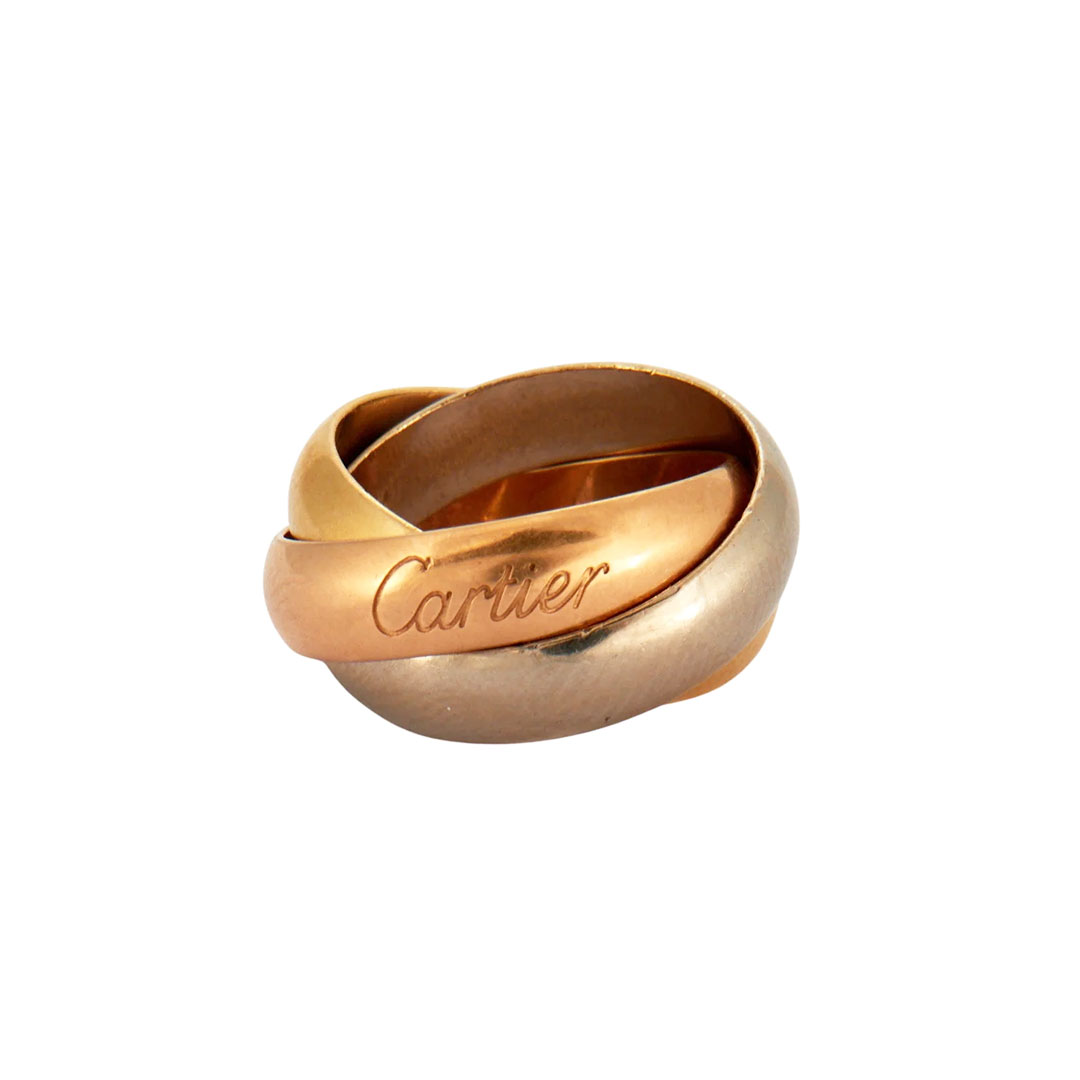
Louis Cartier designed the Trinity in 1924: three interlocking bands, each a different gold — yellow for fidelity, rose (pink) for love, white for friendship. The rings famously cannot be resized, because the bands roll through one another. Cartier has since spun the motif into bracelets, necklaces, earrings and ceramic versions, but the rolling three-gold ring is still the heart of it. The writer and film-maker Jean Cocteau wore two stacked on his little finger, and that image has followed the design ever since.

How much is a pre-owned Cartier Trinity worth in 2026?
The table below segments the wider UK market by piece, size and finish. These are pre-owned asking prices from July 2026, with current retail shown for context; figures converted from euros or dollars are indicative.
| Piece | Configuration | Pre-owned asking (GBP) | Current retail (approx.) |
|---|---|---|---|
| Trinity ring, small / vintage “Les Must” | three-gold, plain | ~£750–£1,100 | small model from ~£1,050 |
| Trinity ring, classic | three-gold, plain | ~£1,200–£2,300 | ~£1,950 (indicative) |
| Trinity ring, large | three-gold, plain | ~£2,000–£3,000 | ~£3,000+ |
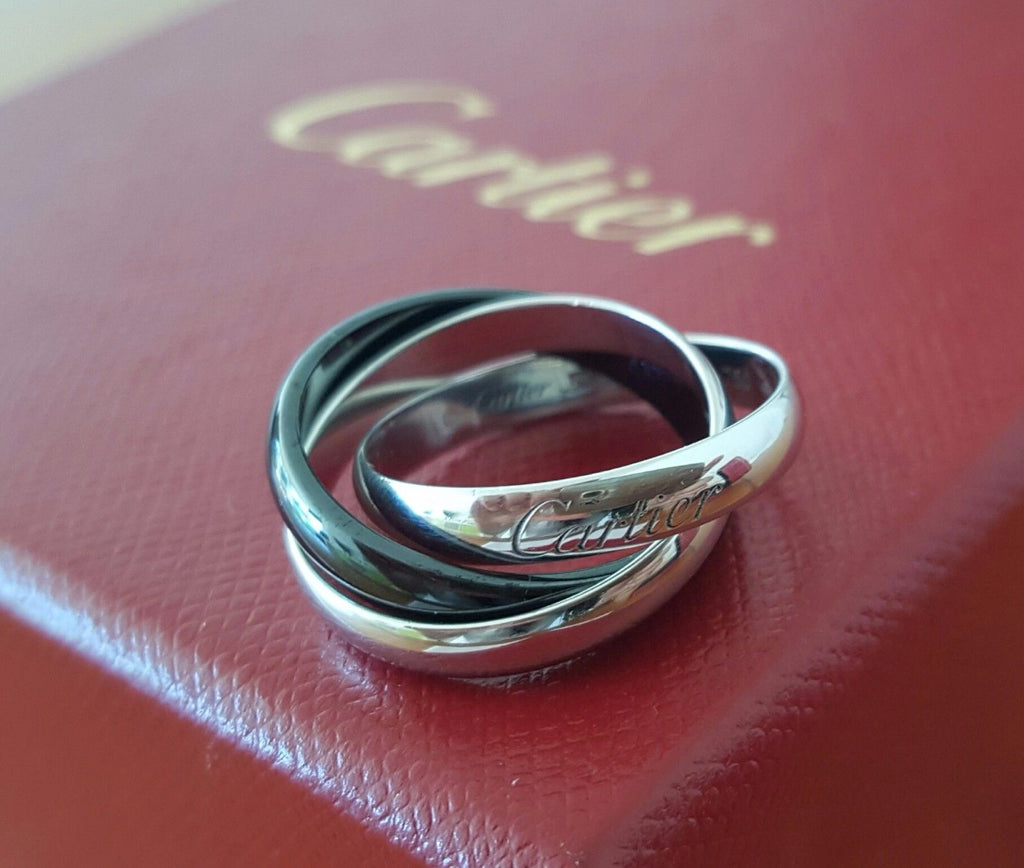
| Trinity ring, ceramic | white gold + ceramic | ~£1,600–£5,200 | ~£5,700 |
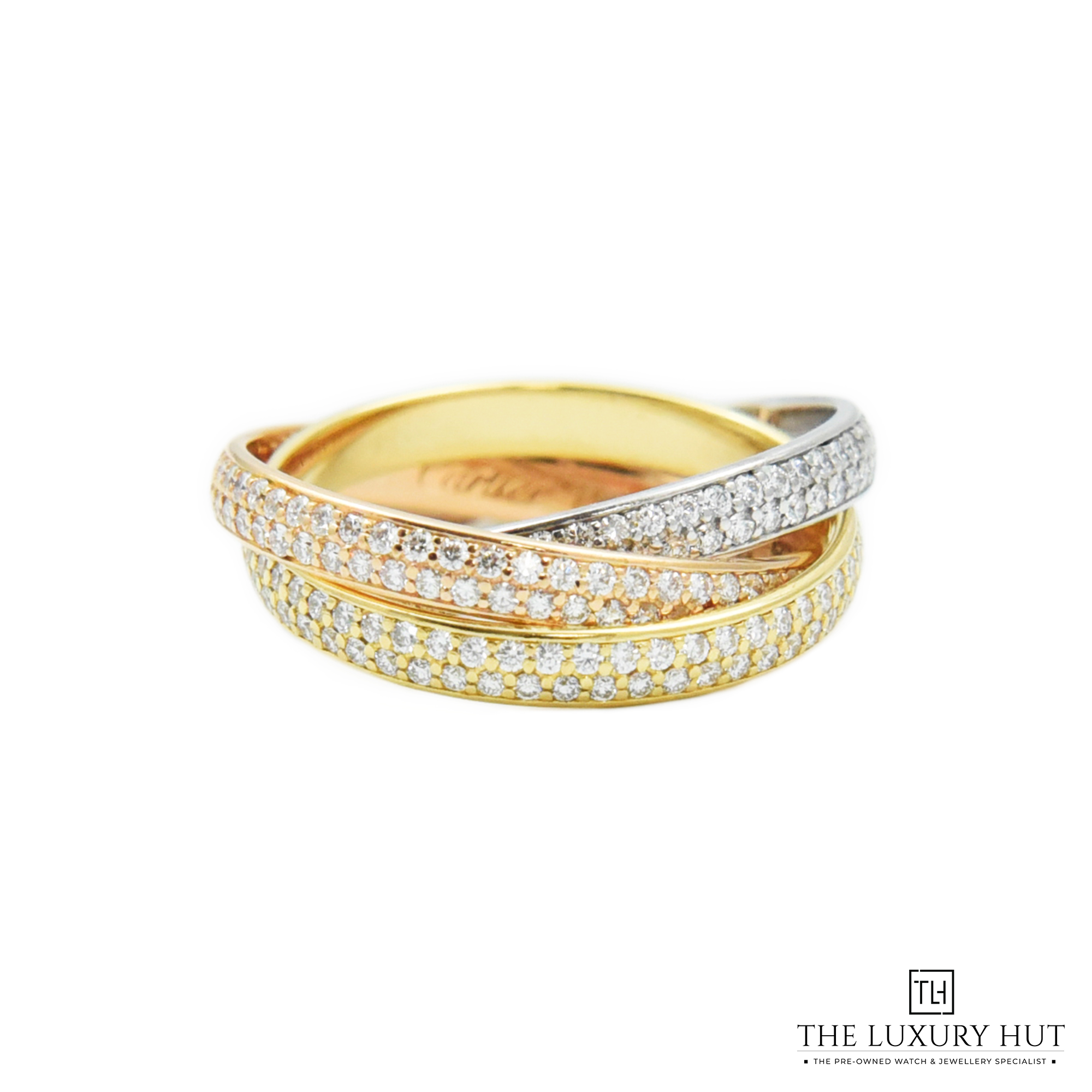
| Trinity ring, diamond-paved | three-gold + diamonds | ~£6,000–£8,000 | large paved ~£40,000+ (indicative) |
| Trinity bracelet (cord / three-gold) | three-gold | ~£1,500–£3,000 | £930–£3,500 |
| Trinity de Cartier bracelet (rigid) | three-gold bangle | ~£8,000–£14,000 | up to ~£14,300 |
| Trinity necklace | three-gold | ~£1,100–£3,500 | from ~£1,600 |
What’s the entry point?
The cheapest genuine Trinity is a small or vintage “Les Must” three-gold ring, worn, without box or papers, from roughly £750–£1,100. There is one practical catch that matters more here than with most rings: a Trinity cannot be resized, so you have to buy the right size first time. At the bottom of the market that means checking the ring size against your finger carefully, and treating a suspiciously cheap “Cartier Trinity” as a reason to authenticate, not to celebrate.
What pushes the price up?
Band width is the first lever — small, classic and large sit in rising tiers because each step adds gold. After that it’s finish. Diamond-paved versions jump to the £6,000–£8,000 range pre-owned; the ceramic Trinity de Cartier (white gold with black or white ceramic) trades from about £1,600 up to £5,200 against a £5,700 retail; and the rigid Trinity de Cartier bracelet is the piece that reaches £14,000. Cartier resale has firmed up over the past few years, so plain three-gold rings tend to sit closer to retail than they once did.
Where to buy a pre-owned Cartier Trinity
Worth saying clearly: these are wider open-market asking prices, not Chrono6538’s prices. We sell authenticated Cartier at a premium to the bare private-market floor, because that floor usually comes without papers, service history or any guarantee — and Trinity is one of the most copied designs in jewellery. Browse the fine-jewellery selection at Chrono6538 →
This describes how the Cartier Trinity has been priced on the pre-owned market, not investment advice; values can fall as well as rise. Last updated: July 2026.