A pre-owned Hublot Big Bang starts at roughly £4,800–£5,200 for an early 44mm steel or ceramic example and runs to £15,000–£22,000 for an 18ct King Gold — asking prices as of July 2026. The Big Bang is a case study in why material, not age, sets the price: the same silhouette in steel, titanium, ceramic or gold spans a four-fold range.
What does a pre-owned Big Bang cost in 2026?
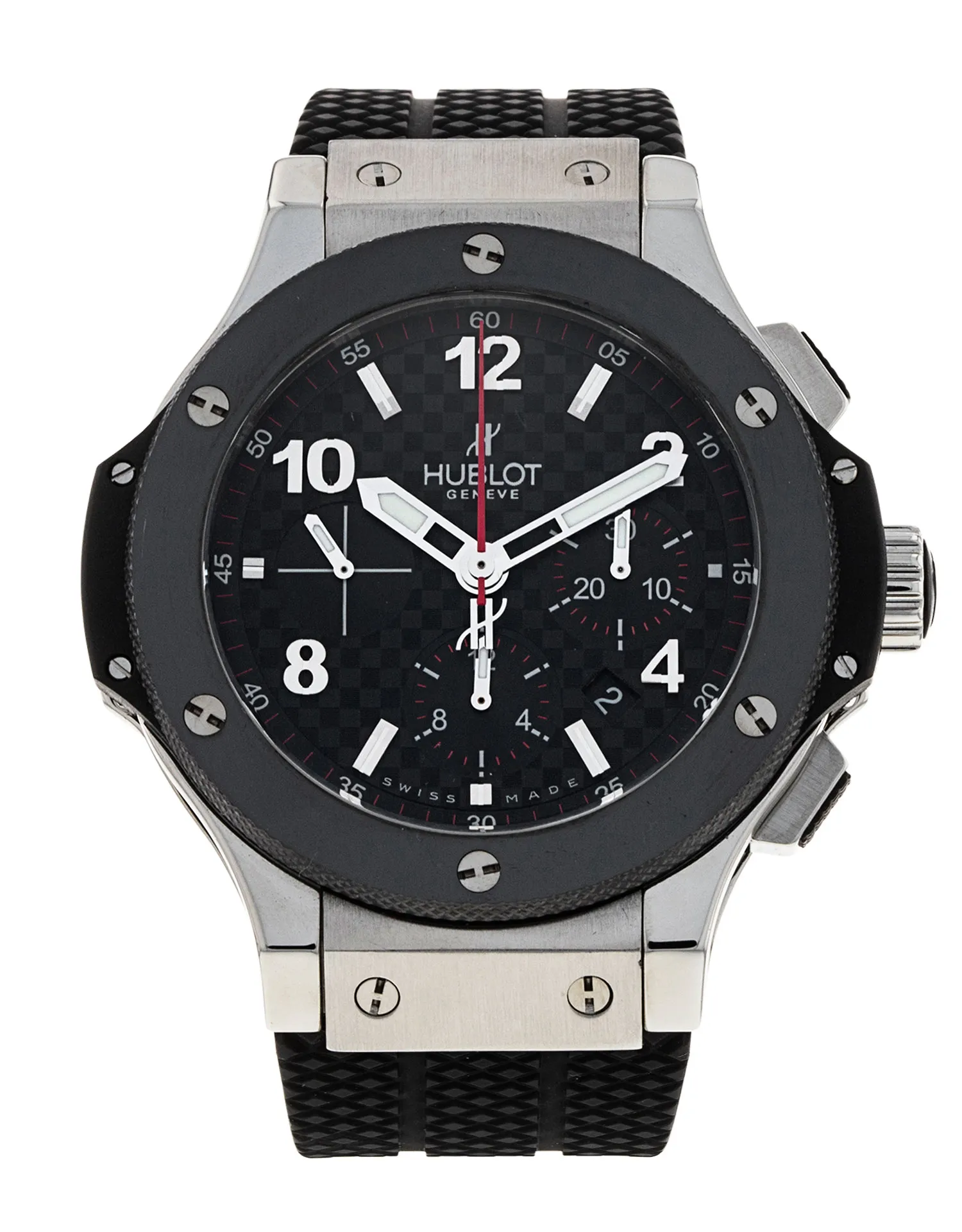
The cheapest honest route in is the original 44mm Big Bang (301-prefix references) in steel or ceramic, at £5,150–£8,500. The modern in-house Unico (411/421/441 references) in titanium or ceramic sits at £10,000–£13,500. The integrated-bracelet Integral carries a genuine premium over the rubber-strap Unico, and precious-metal King Gold pieces are a separate tier again. The one rule that matters: never let a dealer blend steel and gold into a single “from” number.
How do the segments break down?
Decode the reference and you can read the price. In the Big Bang system, 301 is the original 44mm; 411/421/441 are Unico; 451/431 are Integral; the metal codes tell you the case — SX/SB for steel, CI/CT for ceramic, NX/NI for titanium, OX for King Gold. The table below keeps each tier separate, with UK dealer asking prices as of July 2026.
| Segment / material | Model (example ref) | Pre-owned asking (GBP) | Notes |
|---|---|---|---|
| Steel / ceramic, 44mm original | Big Bang 301.SB.131.RX | £5,150–£8,500 | Volume entry point; floor ~£4,800 for early, worn, no box/papers |
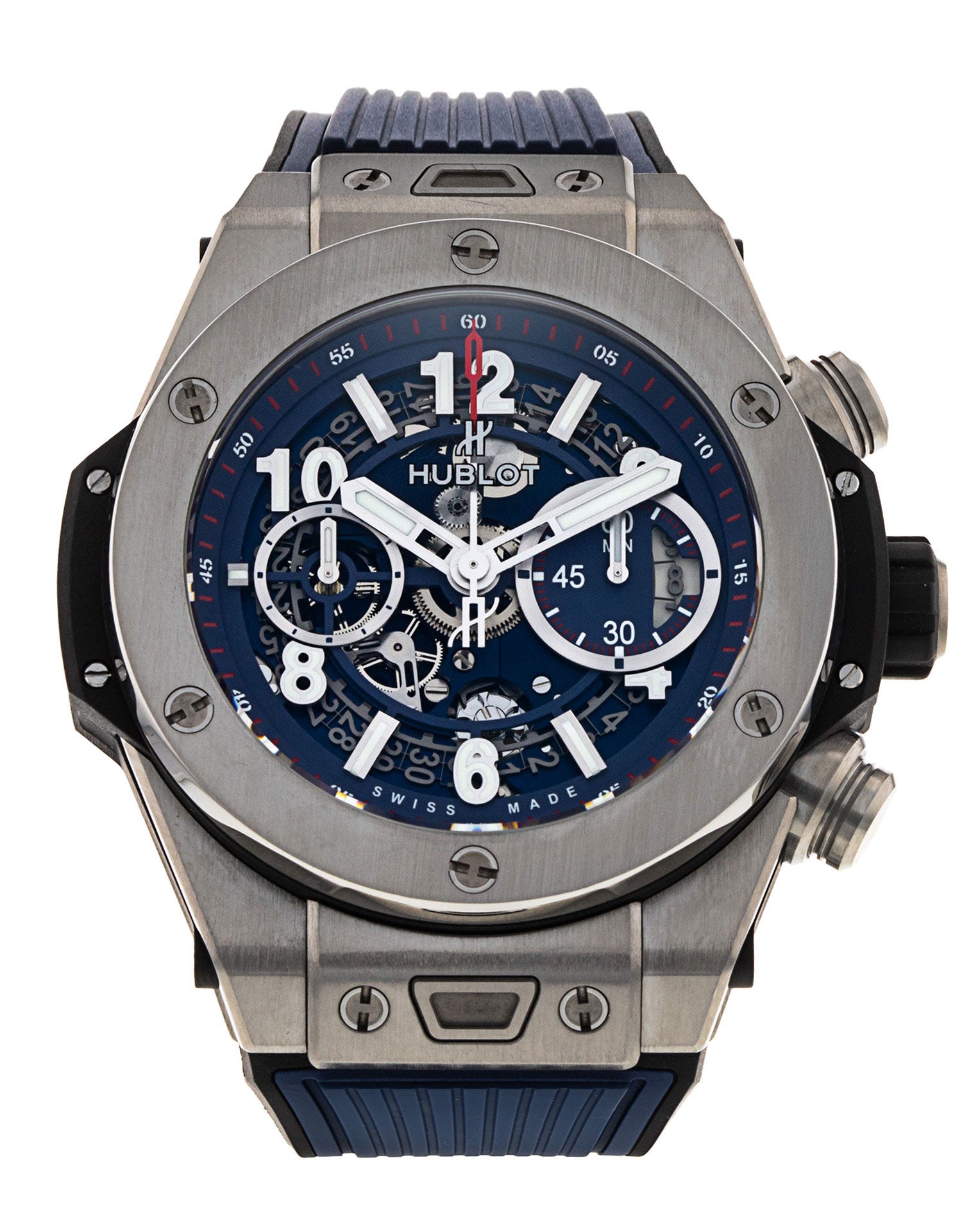
| Unico, titanium / ceramic | Big Bang Unico 411.NX.5179.RX | £10,000–£13,500 | In-house movement; titanium floor ~£8,500 older/no papers |
| Integral (integrated bracelet) | Big Bang Integral 451.CX.1140.CX | £10,500–£15,000 | Premium over the rubber-strap Unico; ceramic holds highest |
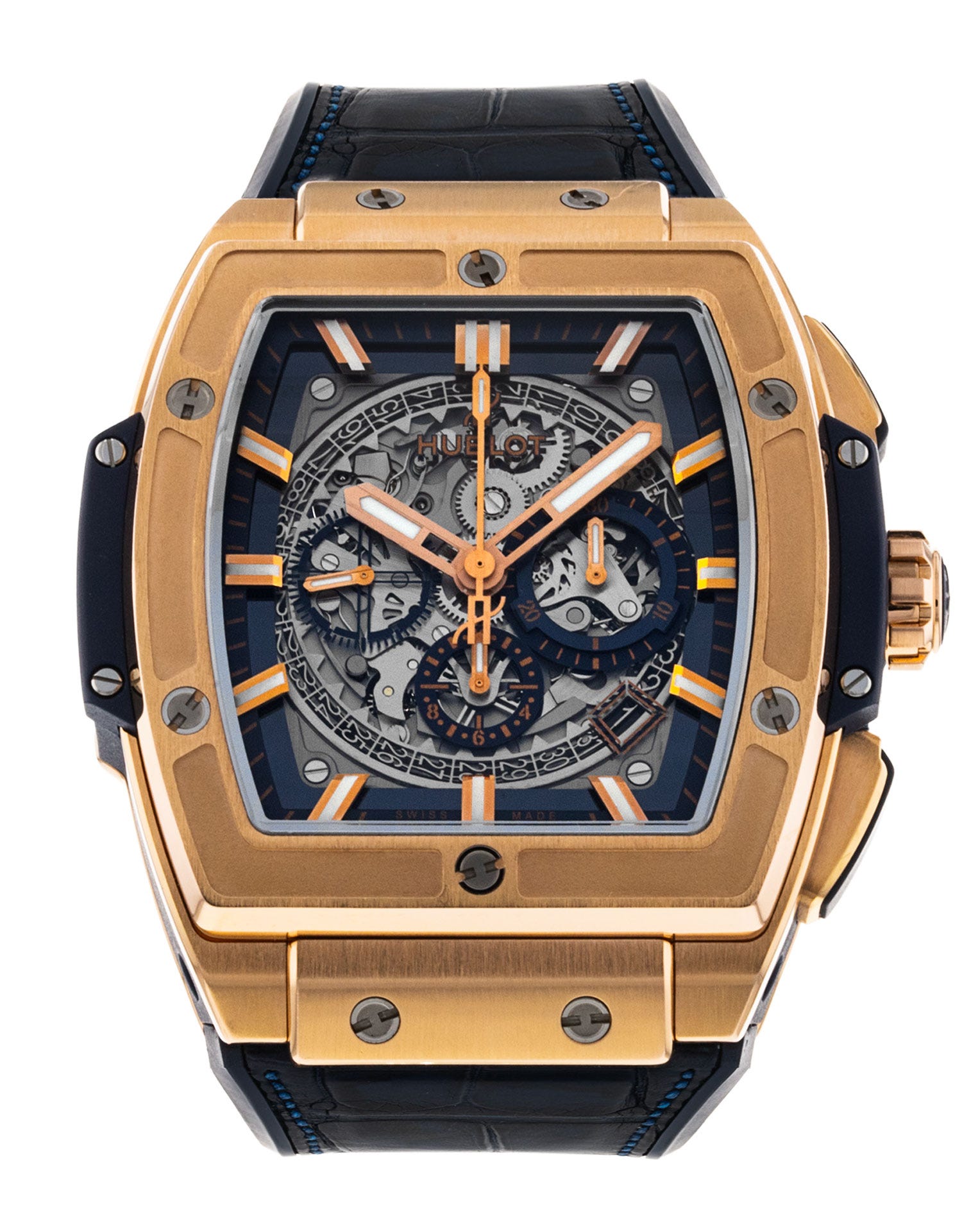
| King Gold (18ct rose gold) | Big Bang King Gold 601.OX.7180.LR | £15,000–£22,000 | Gold runs far above steel; skeleton King Gold at the top |
| Sang Bleu (titanium / ceramic) | Big Bang Sang Bleu II | est. £12,000–£18,000 | UK dealer data thin; indicative only; King Gold higher |
Where did the Big Bang come from?
The Big Bang launched in 2005 as the first creation of Hublot chief executive Jean-Claude Biver, and it rescued a struggling brand almost overnight — a bold porthole-bezel sports watch with six exposed screws that won the Grand Prix d’Horlogerie de Genève design prize that year. Its whole philosophy is Biver’s “Art of Fusion”: deliberately unexpected pairings of ceramic, titanium, carbon and King Gold cases on rubber straps. That is exactly why material drives the pre-owned price far more than the year of manufacture.
Which versions command a premium?
Precious metal and complications sit at the top. An 18ct King Gold skeleton Unico (601.OX) asks £17,000–£22,000; the design-led Sang Bleu and the integrated-bracelet Integral both command more than the standard rubber-strap Unico. A first-time buyer should note the flip side: because so much of the retail price is in materials and finishing, the discount from new can be steep.
Has the Big Bang held its value?
Honestly, the Big Bang depreciates more sharply off retail than a steel-sports Rolex or Patek — a Unico that listed near £16,900–£22,000 typically trades pre-owned at £10,000–£13,000, roughly 30–45% below list. For a buyer that is an opportunity, not a warning: the secondary market is where the value is, and you get the same watch for far less than the first owner paid. Values can fall as well as rise, and this is not investment advice; buy the Big Bang for the design and the wrist presence.
What to check before buying
Match the reference code to the case metal, confirm the ceramic bezel is free of chips, and make sure a Unico chronograph runs and resets cleanly. Box and papers help resale, most of all in the entry tiers. The figures here are wider open-market floors, not Chrono6538’s prices — Chrono6538 sells authenticated, checked and guaranteed watches at a premium to the bare private-market number.
You can see the Hublot collection at Chrono6538 →
Prices are third-party UK dealer asking prices (Watchfinder & Co, Chrono24 UK and others), gathered as guide values. Last updated July 2026.