A pre-owned Omega Seamaster Polaris is one of the cheapest honest ways into vintage Omega — roughly £400–£550 at the floor and £700–£1,200 for a clean two-tone quartz, as of July 2026. It is a Gérald Genta-designed, integrated-bracelet Omega from the 1980s, and for the money it buys a lot of design pedigree, provided you go in knowing it is mostly a quartz watch.
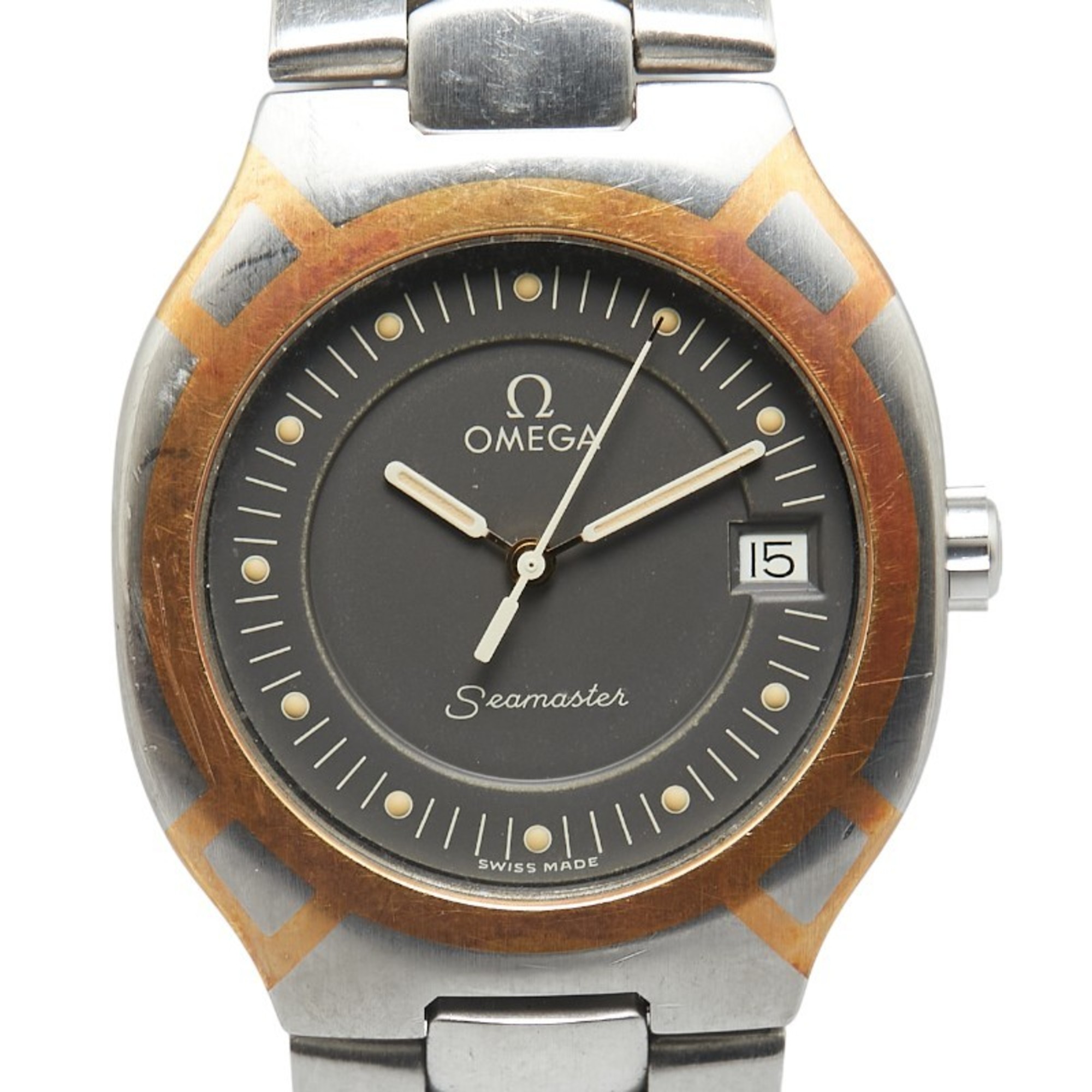
The Seamaster Polaris was Omega‘s 1980s foray into sleek, integrated-bracelet quartz watches, launched in 1982 to a Genta design, with an angular case and, in many references, a multifunction analogue-digital layout. It was named in the spirit of polar exploration and sat alongside Omega’s Olympic editions of the era. A small number of automatics followed in the early 1990s as mechanical watches came back into fashion, and those are the ones collectors chase.
How much does a pre-owned Omega Seamaster Polaris cost in 2026?
These are wider open-market asking prices in GBP, drawn mainly from Chrono24 UK and 1stDibs in July 2026; where a figure was quoted in USD it has been converted and marked indicative. They are for guidance, not sold figures, and not Chrono6538’s own prices — our pieces are checked and guaranteed, so they sit above the private-market floor.
| Configuration | Reference family | Pre-owned asking (GBP, Jul 2026) | Notes |
|---|---|---|---|
| Steel quartz | 386.x / 2510.x | £400–£1,000 | A genuinely all-steel piece is the affordable end |
| Two-tone steel & gold quartz | 396.x | £700–£1,200 | The core of the range; 18k gold is usually an inlay |
| Steel & gold chronograph | 2593.50 | £1,100–£1,500 | Quartz chronograph variant |
| Titanium (Titane) | 396.1000 | £430–£850 | Around or below two-tone quartz |
| Titane XL Chronograph (automatic) | Genta design | £1,500+ | The collector standout; a different market |
| GMT / Olympic editions | 3961122 | Premium, case-by-case | Scarcer; priced individually |
What is the honest cheap-end reality?
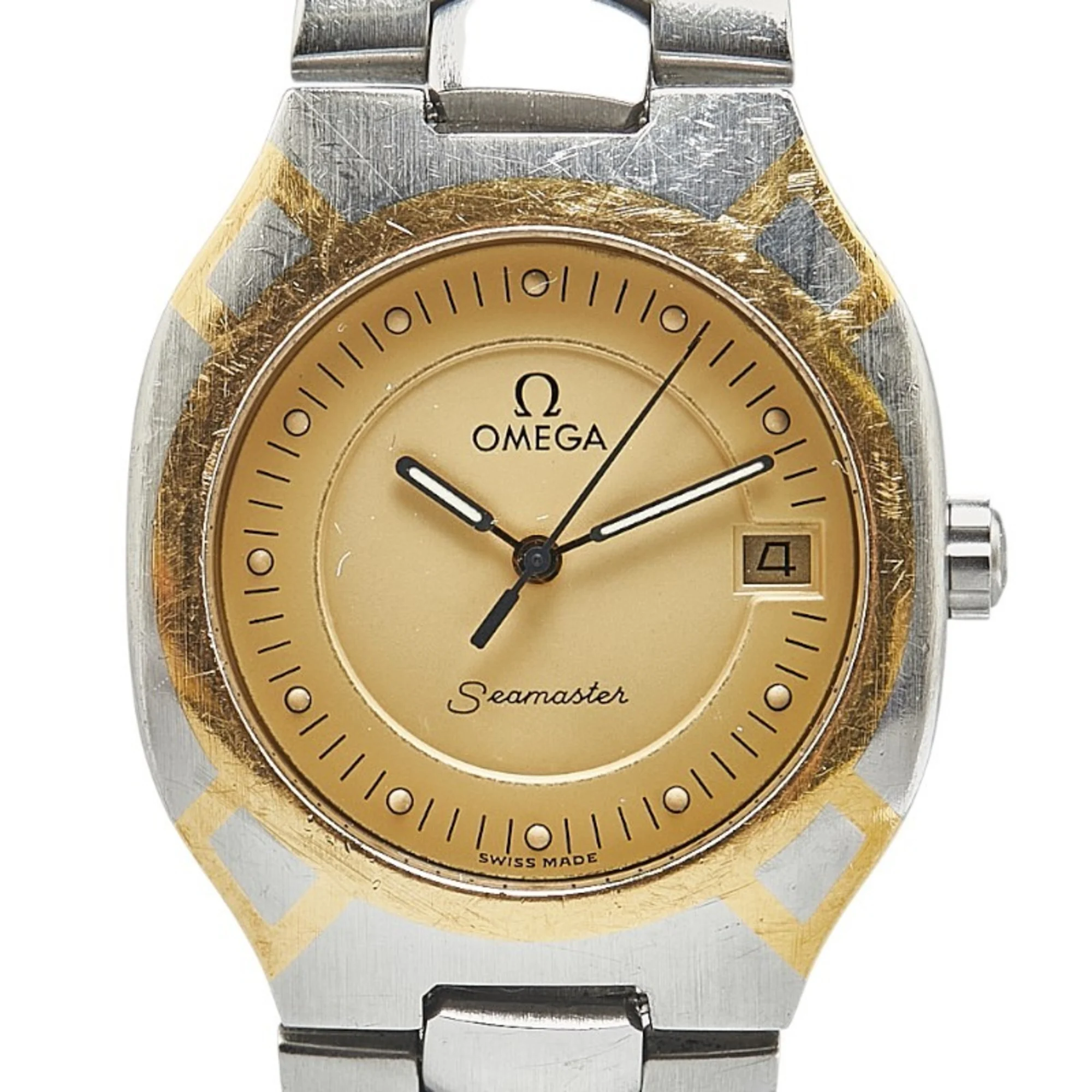
This is a budget entry into vintage Omega, and it is worth being plain about the trade-offs. You can realistically be wearing a genuine, running Polaris on its bracelet for well under £1,000 — often £500–£800 for a clean two-tone quartz, and less for a tired or no-box example. Against that: most are quartz (battery and, on multifunction models, module servicing that can be awkward to source), the cases are compact at around 32–33mm, and the “gold” is almost always an 18k inlay rather than a solid-gold case. On solid gold specifically, the data is thin and we will not quote a figure we cannot stand behind.
Which versions carry a premium?
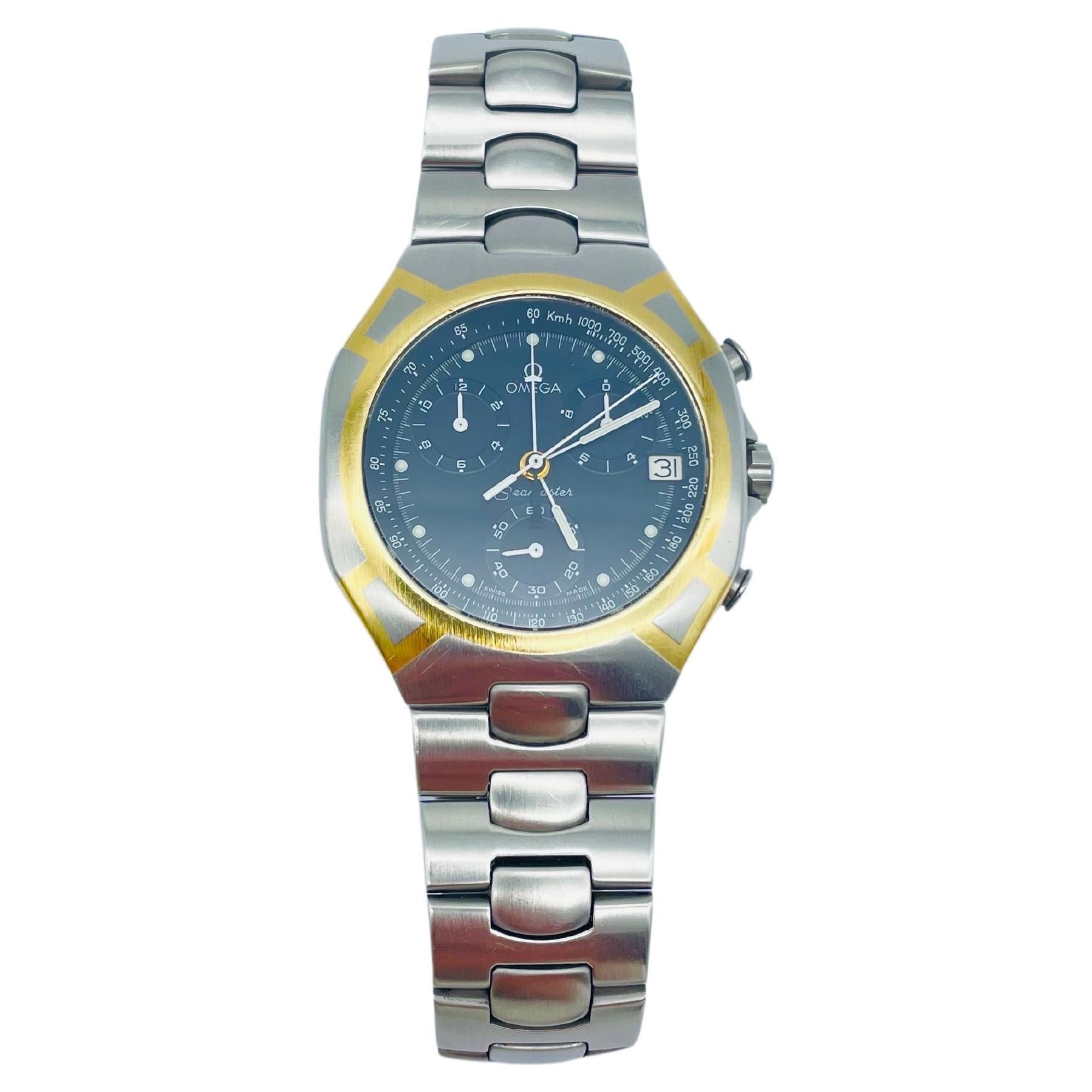
Two things lift a Polaris above the ordinary quartz. The first is the chronograph: steel-and-gold Polaris Chronographs (ref 2593.50) ask roughly £1,100–£1,500. The second, and the real prize, is the Titane XL Chronograph — the only Polaris fitted with an automatic chronograph movement, another Genta design, which trades well beyond the standard pieces. The GMT reference and the Olympic limited editions are scarcer still and priced case by case.
Where to buy an Omega Seamaster Polaris
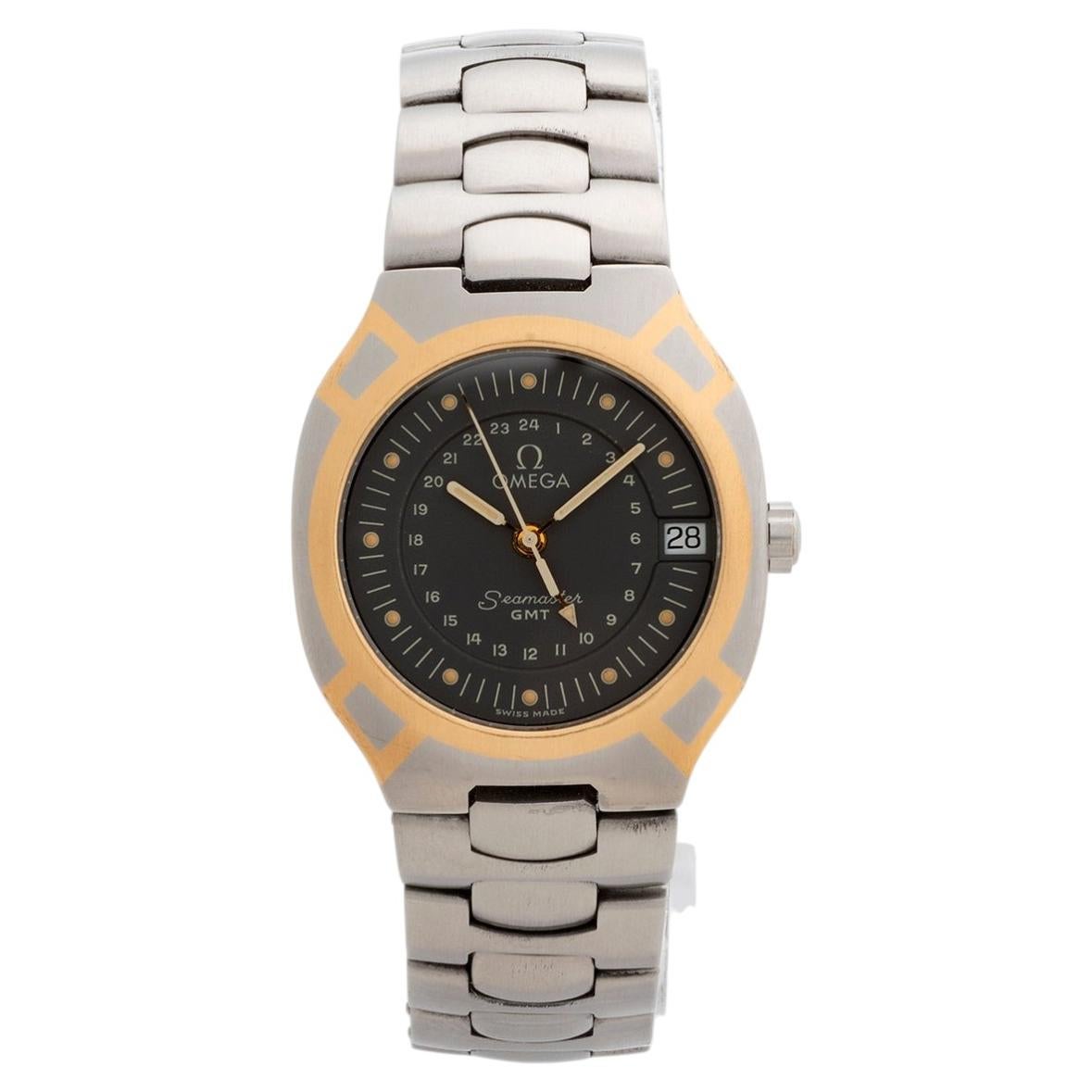
Buy on condition and honesty about the movement. Confirm whether it is quartz or one of the rarer automatics, check the multifunction display works if fitted, and be realistic that a compact 1980s case wears small by modern standards. For the money, it is a Genta-designed piece of Omega history rather than a value that will climb. You can see the Omega Seamaster Polaris pieces at Chrono6538 →, each authenticated and guaranteed.
Prices are wider-market asking prices as of July 2026, gathered for guidance only and not offered as Chrono6538’s prices. How a watch has held its value is descriptive, not a forecast — this is not investment advice, and values can fall as well as rise.