Both of these are the watch you reach for every day for the next thirty years, and both are steel classics that quietly outlast fashion — but they are not priced the same. As of August 2026 a pre-owned Omega Seamaster Aqua Terra in steel starts around £3,385, while a comparable steel Rolex Datejust begins nearer £4,750 and a current-production example sits well above that. The Aqua Terra undercuts the Datejust by a couple of thousand pounds like-for-like — the question is what that difference buys you.
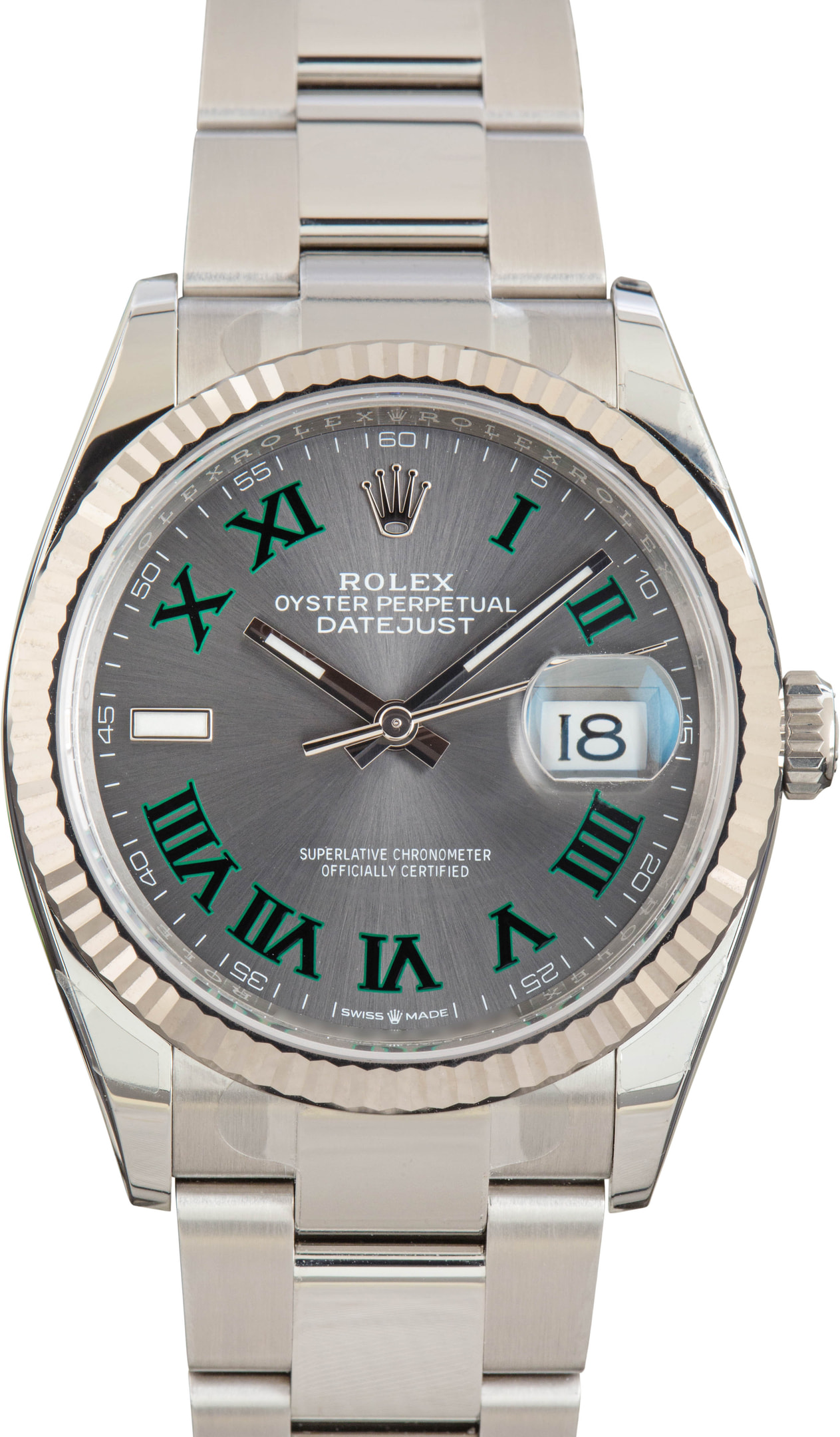
What does a pre-owned Datejust cost?
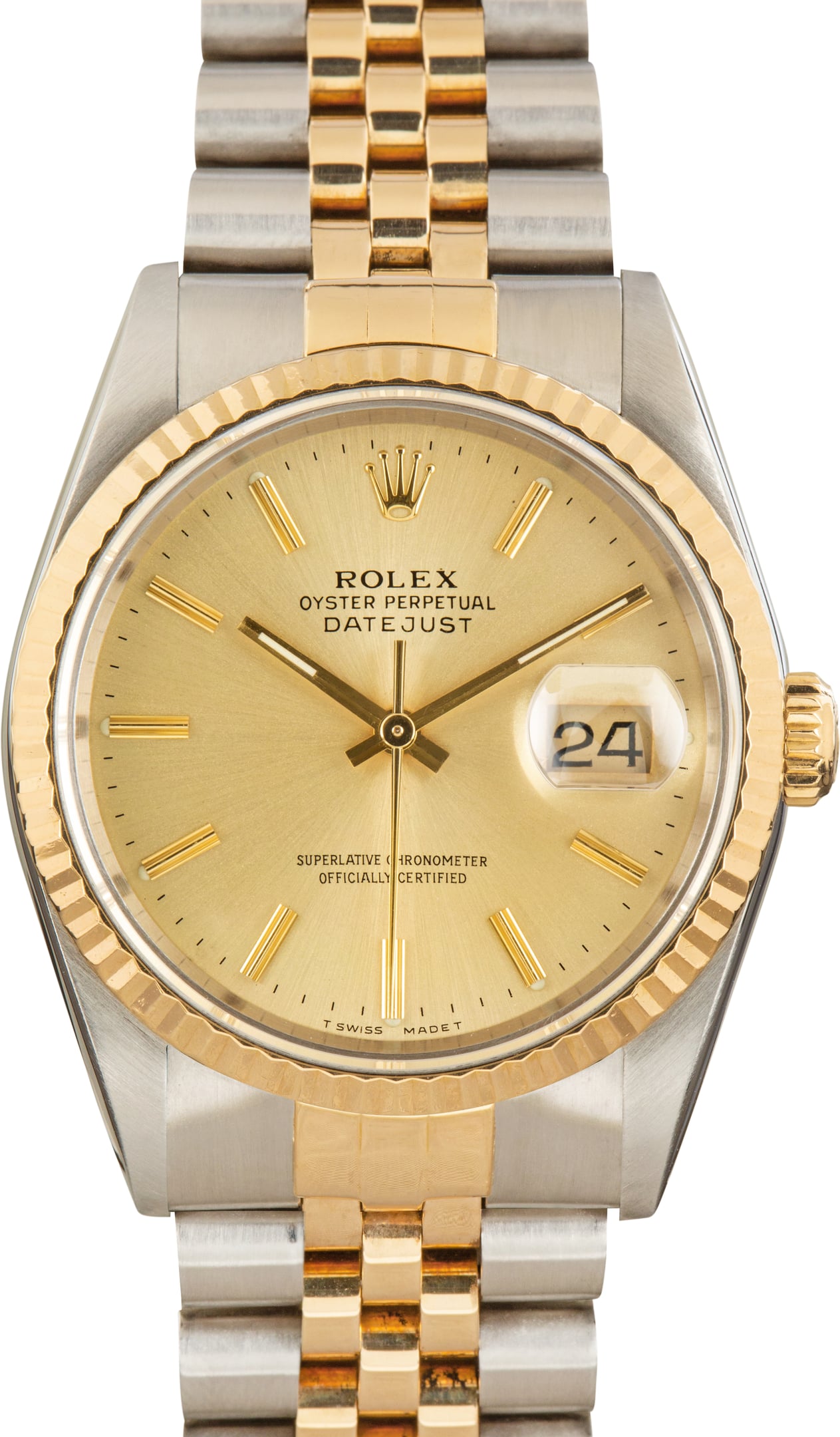
The Rolex Datejust spans more configurations than almost any other watch, so segment discipline matters. The genuine floor is a vintage all-steel 36mm (ref 16200) at roughly £3,800–£4,500, or a steel case with white-gold fluted bezel (16234) from about £4,750, for the oldest and most-worn examples with thin or no box and papers. Budget £400–£800 for a service at that level and expect polished cases. Current-production 36mm (126234) sits at £7,000–£9,500, and the 41mm cases — 126300 steel, 126334 Wimbledon, 126333 two-tone — carry a clear premium for their contemporary presence and current-model status.
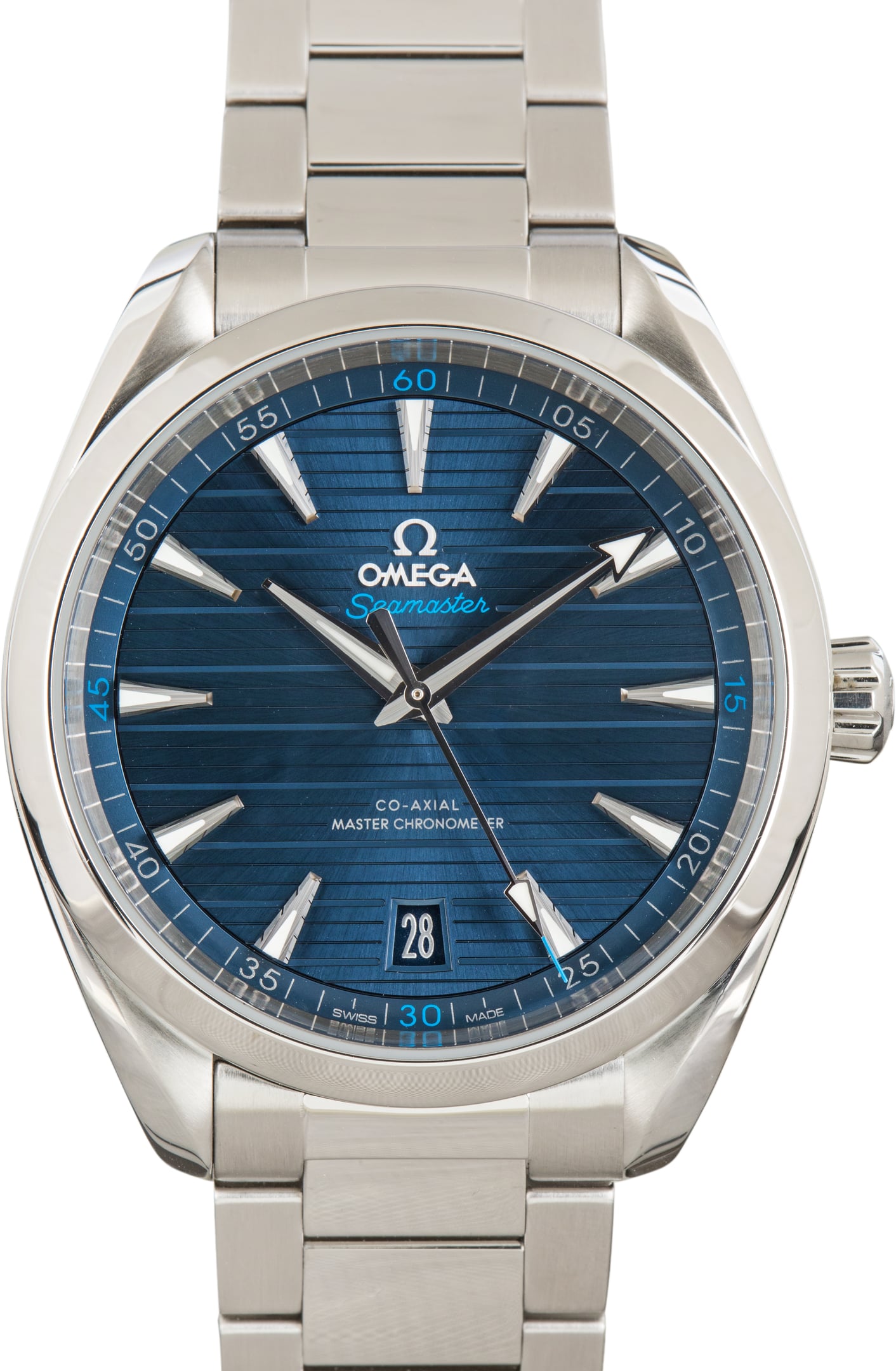
What does a pre-owned Aqua Terra cost?
The Omega Aqua Terra 150M floor is an older-generation steel 231.10 at roughly £3,385–£3,950 (2010–2016, worn but with box and papers). The current-generation 220.10 with its horizontal teak dial sits at £4,000–£5,895 across the popular blue, black, grey and silver dials. Complications and precious metal climb from there: the Worldtimer 220.32 at about £7,950, and the full-gold 220.53 at £12,250.
How do they line up, segment by segment?
Asking prices below are dealer and marketplace listings as of August 2026, not sold figures, and steel is never blended with gold.
| Segment | Reference | Asking price (Aug 2026) |
|---|---|---|
| Aqua Terra — steel floor | 231.10 (older gen) | £3,385–£3,950 |
| Datejust 36 — steel floor | 16200 (vintage) | £3,800–£4,500 |
| Datejust 36 — steel + WG bezel | 16234 (vintage) | £4,750–£6,950 |
| Aqua Terra — current steel | 220.10 | £4,000–£5,895 |
| Datejust 36 — current steel + WG | 126234 | £7,000–£9,500 |
| Aqua Terra — Worldtimer | 220.32 | ~£7,950 |
| Datejust 41 — two-tone | 126333 | £11,500–£14,500 |
| Aqua Terra — full gold | 220.53 | ~£12,250 |
Two-tone and gold Datejusts, plus the sought-after Wimbledon and palm dials, run higher still; treat the modern 41mm and gold figures as indicative bands and check live stock before committing.
Which is the better-built watch for the money?
On paper the Aqua Terra makes a strong case. A like-for-like steel example undercuts a steel Datejust by around £2,000 while carrying an in-house Master Chronometer co-axial movement — the calibre 8500, 8800 or 8900 — certified to resist 15,000 gauss of magnetism with a 55–60 hour reserve. That arguably out-specs the Rolex 3235 on the numbers. What the Datejust offers instead is the deepest pre-owned market of any watch, the strongest brand recognition and the easiest exit. You pay a “Rolex tax” for that certainty; whether it is worth £2,000 to you is the whole decision.
So which should you buy?
If your priority is horological substance and discreet, versatile value — more watch per pound — the Aqua Terra is the connoisseur’s pick. If your priority is liquidity, universal recognition and effortless resale, the Datejust remains the default for good reason. Both will serve for decades; they simply reward different instincts.
A note on the figures: these are wider open-market floors, not Chrono6538 prices. We sell authenticated, checked and guaranteed pieces at a premium to the bare private-market floor.
This is descriptive market information, not investment advice — values move with condition, completeness and market cycles, and can fall as well as rise.
Browse our current stock: See pre-owned Rolex Datejust → · See pre-owned Omega Aqua Terra →
Guide values from Chrono6538’s proprietary dataset of pre-owned pieces and current market listings. Last updated August 2026.