These two field watches share a bloodline and a brief — a clean, luminous, tough dial you can read in any light — but they cost very different money. As of August 2026 a current Tudor Ranger (ref 79950) floors near £2,000 pre-owned, while the cheapest steel Rolex Explorer, a ref 114270, starts around £4,500. The Explorer asks roughly two to three times as much for the same job — and since Tudor is Rolex-owned, the Ranger is the closest thing there is to a factory-sanctioned shortcut.
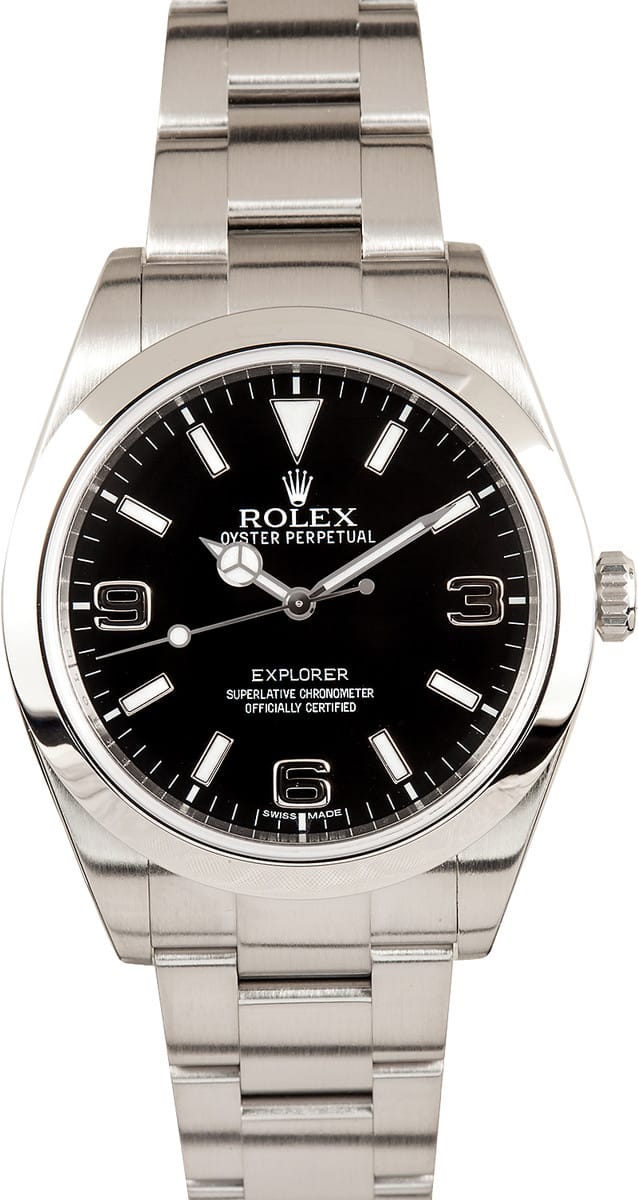
What does a pre-owned Explorer cost?
The Rolex Explorer entry is a 36mm 114270 (2001–2010) at £4,500–£5,950; a worn no-papers example floors near £4,500, though a serviced full set around £5,500 is often better value once you factor £600–£900 for neglected servicing. The 39mm 214270 (2010–2021) sits at £6,495–£7,500 and the current 36mm 124270 at £6,500–£7,500. Vintage 1016 examples run £8,000–£16,000 and beyond for rare dials, and the larger Explorer II (16570 neo-vintage, 226570 current) is its own tier from roughly £6,000 to £13,000.
What does a pre-owned Ranger cost?
The Tudor Ranger is Tudor’s value-entry field watch. The current 39mm 79950 (2022-onward, in-house MT5402, COSC, 70-hour reserve) trades at £2,000–£2,900, with worn examples near the floor and box-and-papers pieces at the top. The discontinued 41mm Heritage Ranger 79910 sits lower at £1,400–£2,300, and genuine 1970s vintage Ranger and Ranger II examples span £1,700–£5,000 depending on originality — a papered collector Ranger II can reach the top of that band.
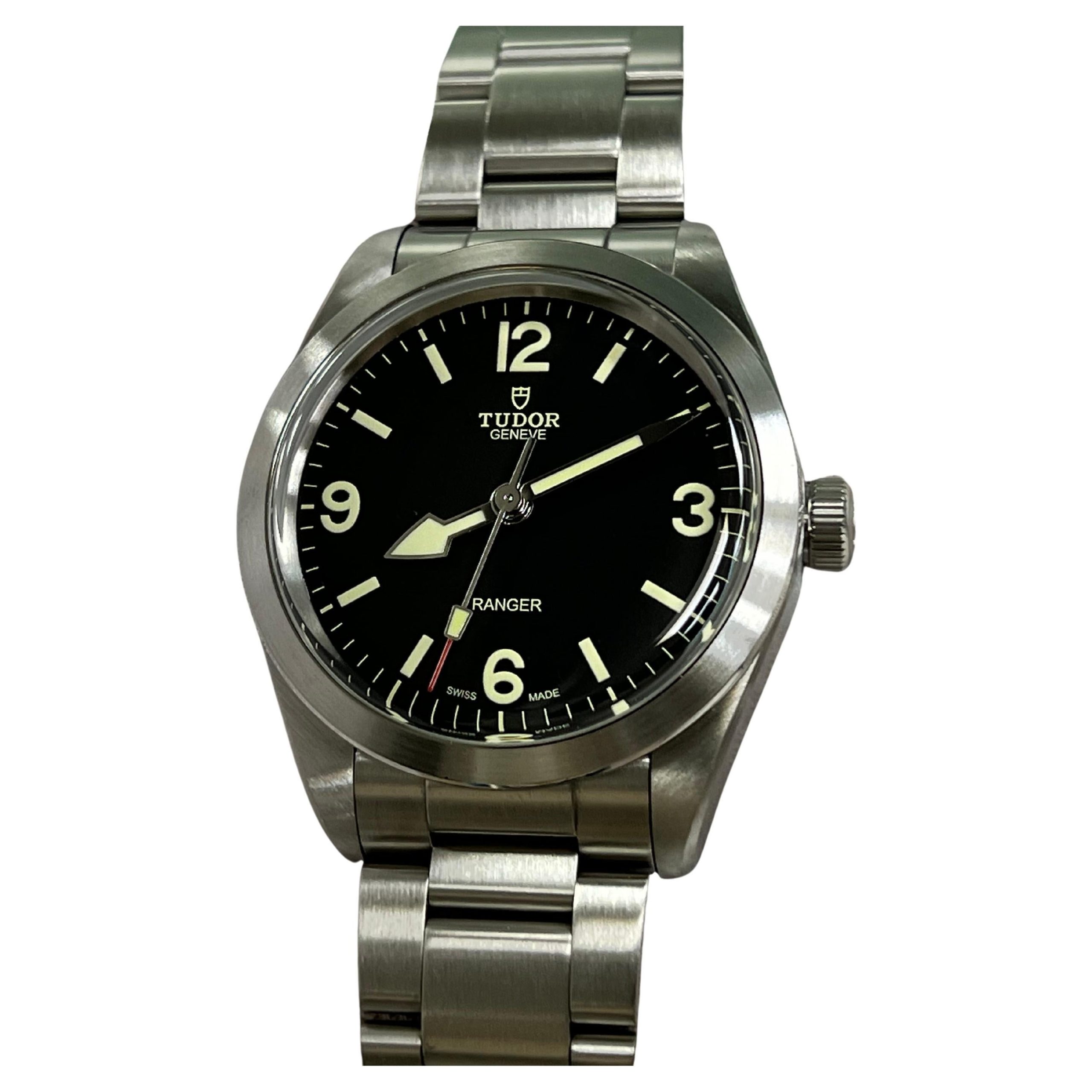
How wide is the price gap, really?
Asking prices below are dealer and marketplace listings as of August 2026, not sold figures.
| Segment | Reference | Asking price (Aug 2026) |
|---|---|---|
| Ranger — Heritage, discontinued | 79910 (41mm) | £1,400–£2,300 |
| Ranger — current in-house | 79950 (39mm) | £2,000–£2,900 |
| Ranger — vintage / Ranger II | 9111/0 (1970s) | £1,700–£5,000 |
| Explorer 36 — steel floor | 114270 | £4,500–£5,950 |
| Explorer — 39mm | 214270 | £6,495–£7,500 |
| Explorer 36 — current | 124270 | £6,500–£7,500 |
| Explorer — vintage | 1016 | £8,000–£16,000 |
At the current end, a 124270 at £6,500-plus against a 79950 at £2,000-plus is roughly a threefold premium for the crown — for two watches that look, wear and survive remarkably alike.
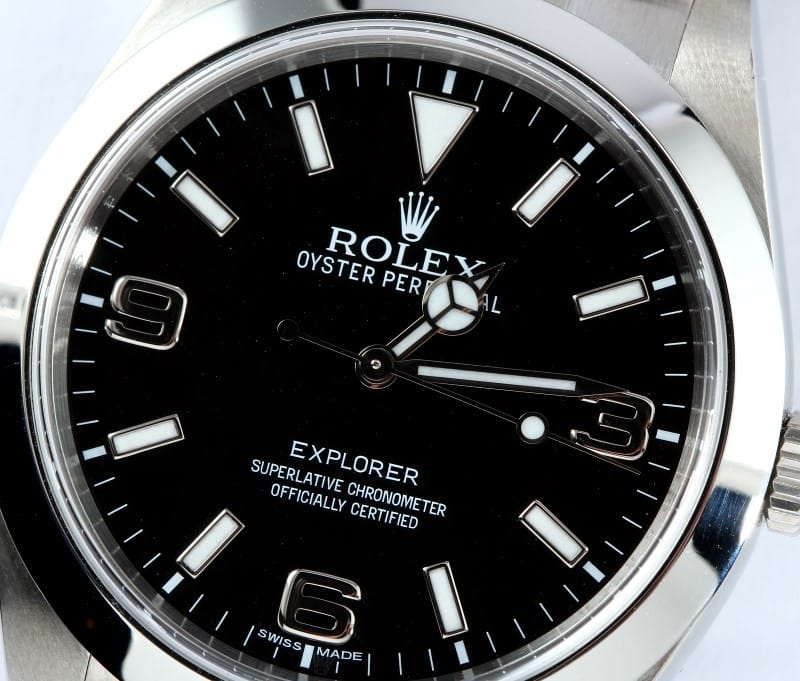
Are they really the same watch underneath?
Not identical, but strikingly close. Both descend from 1950s British North Greenland Expedition tool watches; both are 36–39mm, no-nonsense, luminous and rated to 100m. The Ranger’s in-house MT5402 (COSC-certified, 70-hour reserve, silicon hairspring) arguably out-specs the Explorer’s calibre on power reserve. What the Explorer adds is the Rolex name, the “first to the summit of Everest in 1953” heritage, and materially stronger residual-value stability and liquidity.
So which should you buy?
If you want the badge, the deepest resale market and the strongest hold on value, the Explorer justifies its premium — it is highly liquid and quick to sell on the UK secondary market. If you want the same field-watch look and toughness, from the same corporate family, for a fraction of the outlay, the Ranger is the smart-money pick — closer to a buy-to-wear than a buy-to-trade. It holds value less firmly than the Explorer, but it costs so much less to get into that the maths often favours it.
A reminder on the numbers: these are wider open-market floors, not Chrono6538 prices. We sell authenticated, checked and guaranteed pieces at a premium to the bare private-market floor.
Descriptive market information, not investment advice — values move with condition, completeness and market cycles, and can fall as well as rise.
Browse our current stock: See pre-owned Rolex Explorer → · See pre-owned Tudor Ranger →
Guide values from Chrono6538’s proprietary dataset of pre-owned pieces and current market listings. Last updated August 2026.