Tiffany’s two modern signatures pull in different directions, and the choice between them is really a small act of self-description. The Tiffany T is clean, architectural, quietly graphic — a letter that stands for the wearer more than any gift. HardWear is the tougher, downtown sister: ball-and-chain hardware with a bit of swagger. Both are now bought mostly by the lady wearing them, for herself — and both start accessibly, an 18ct gold T1 ring from around £1,100 pre-owned, a HardWear ball bracelet from as little as £150 in silver.
What is the difference between Tiffany T and HardWear?
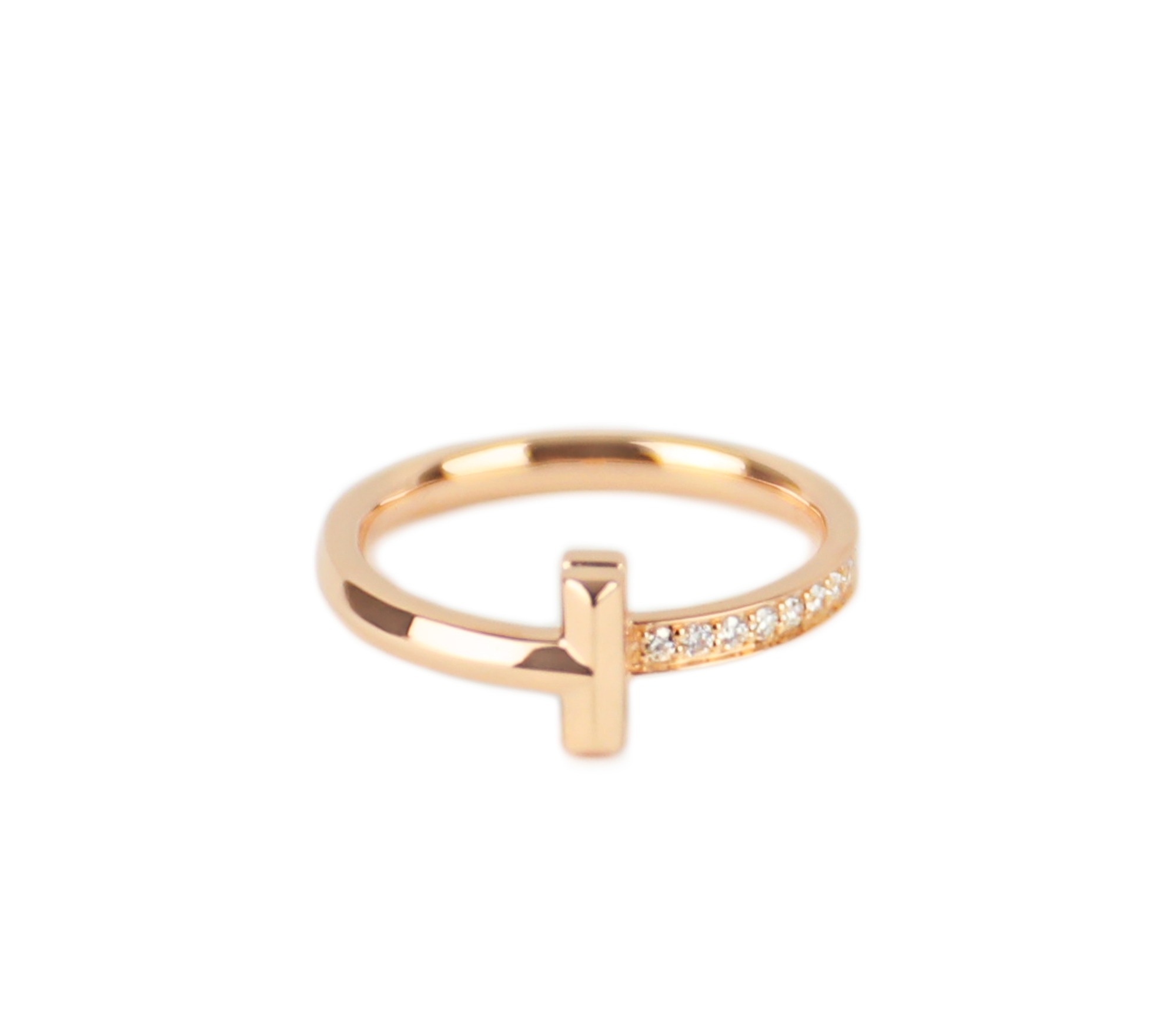
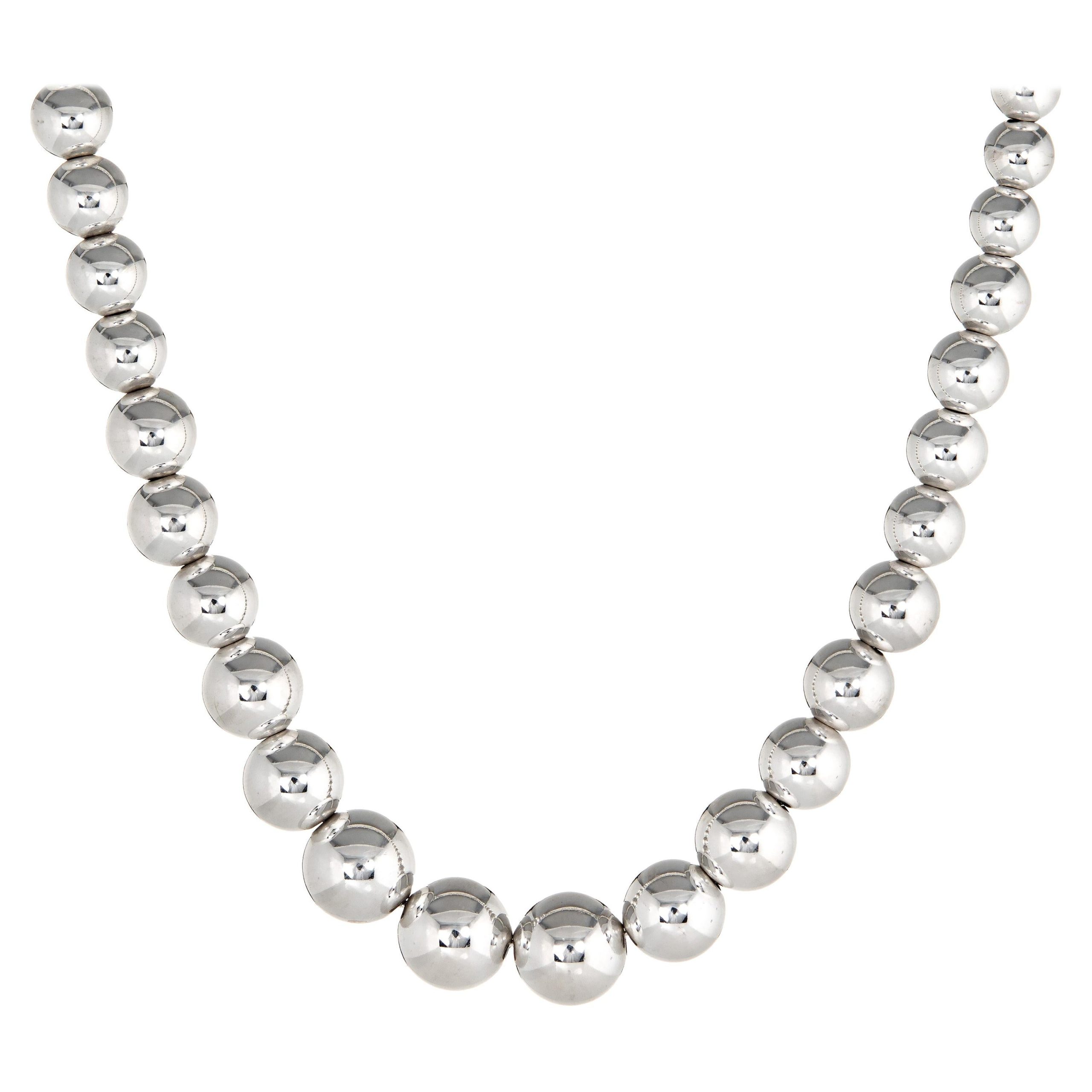
Tiffany T, launched in 2014, turns the house’s initial into a piece of design — the “T” as a bold, minimalist bar that stacks and layers. It is contemporary and urban, and Tiffany’s own line for it is simply “the T is you”. HardWear draws on a 1962 Tiffany archive design and carries an Elsa-Peretti-era, downtown-New-York attitude: graduated gold or silver balls, gauge links, a wrap bracelet that fastens like a padlock. Where the T is refined and linear, HardWear is sculptural and a little fearless — armour rather than a whisper.
How much is a pre-owned Tiffany T?
Tiffany T is predominantly an 18ct gold collection, so the metal underpins the price. T1 rings in rose, yellow or white gold without pavé start from around £1,100 for a worn example and sit near £1,600 in good order; with pavé diamonds they run £2,200–£5,500. T Wire bracelets in gold begin around £1,600, more with diamonds or mother-of-pearl. The T1 diamond hinged bangle is the halo of the line — narrow versions resell from roughly £4,000, heavier pavé examples well into five figures. There is very little sterling silver in Tiffany T, so silver is not really a segment here.
How much is a pre-owned Tiffany HardWear?
HardWear spans a wider spread because it runs from silver to solid gold. A sterling silver ball bracelet starts from around £150 and typically asks £230–£340; a graduated silver ball necklace sits around £380–£520. In 18ct gold, a small ball bracelet runs roughly £1,800–£3,500, gold link bracelets and necklaces about £3,000–£7,000, and pavé-diamond gold pieces £6,000–£15,000 and up. The chunky gold has real bullion mass behind it, which gives it a firmer floor than the lighter T wire pieces.
Pre-owned UK guide ranges, as of July 2026
| Segment | Tiffany T | Tiffany HardWear |
|---|---|---|
| Silver entry | minimal silver in the line | ball bracelet from ~£150; necklace ~£380–£520 |
| 18ct gold, no diamonds | T1 ring ~£1,100–£1,600; T Wire from ~£1,600 | ball bracelet ~£1,800–£3,500; links ~£3,000–£7,000 |
| Gold + diamonds | T1 pavé ring ~£2,200–£5,500 | diamond links ~£6,000–£15,000+ |
| Halo piece | T1 diamond hinged bangle from ~£4,000 | heavy gold wrap / graduated gold ~£2,500–£6,000+ |
These are wider open-market asking prices, not Chrono6538’s own prices — our pieces are authenticated, checked and guaranteed, and sit at a premium to the bare private-market floor.
Which resells more easily?
Neither is a stone-driven piece, so descriptively — and this is not investment advice — both are carried by brand desirability and metal weight rather than any resale index. Silver pieces of either line trade quickly but softly, often well below retail, because there is little bullion floor. The 18ct gold examples of both hold a firmer floor, and HardWear’s heavier gold shows that most visibly. Boxes, pouches and receipts consistently lift what a piece asks and how fast it sells.
So which is more you?
Choose Tiffany T if you like clean lines, everyday stacking and a piece that reads as a personal monogram — understated, modern, endlessly wearable. Choose HardWear if you want weight and attitude, jewellery with a bit of edge that still feels grown-up. Both are self-purchase pieces at heart; both are authenticated, guaranteed, and yours to love.
Buying Tiffany pre-owned
Pre-owned is where Tiffany often makes the most sense — the same piece, checked and guaranteed, at a saving on the boutique. Explore authenticated Tiffany pieces at Chrono6538 and see our jewellery collection →
Last updated: 28 July 2026. Guide ranges are drawn from Chrono6538’s proprietary dataset of pre-owned pieces and current open-market asking prices; individual pieces vary by condition, box and papers.