Two watches, each doing a job the other cannot, is a more useful collection than six bought one at a time on impulse. The pile grows because each purchase is judged on its own merits rather than against what is already in the drawer, and the result is four variations on one theme, all steel, all forty millimetres, all on a bracelet, none of them worn much. A pair chosen deliberately behaves differently. You wear both, both stay in condition, and the gap between them tells you what the third watch would need to be before it earns a place.
![[USED] ROLEX DATEJUST 179171 G-SERIAL BLACK ROMAN LADIES Watch](https://chrono6538.com/wp-content/uploads/2026/06/000000011737_5OFbFvK.jpg)
Why two watches and not one?
One watch worn daily takes everything: the desk knocks, the shirt cuffs, the seawater, the gym. Bracelet stretch, crystal scratches and case-edge wear all accumulate on the same piece, and when it goes in for service you are left with nothing on your wrist. Two watches worn alternately halve that load. Each gets rest, each gets cleaned more often because you notice the marks when you pick it up cold, and a service booking becomes an inconvenience rather than a gap.
There is a second, less obvious argument. A single watch has to cover every occasion, which usually means compromising on all of them. A watch that is robust enough for a weekend on a boat is rarely the watch you would choose under a dinner jacket, and a slim gold dress piece is a poor companion for a building site. Two watches let each one be good at something instead of adequate at everything.
What should the first one be?
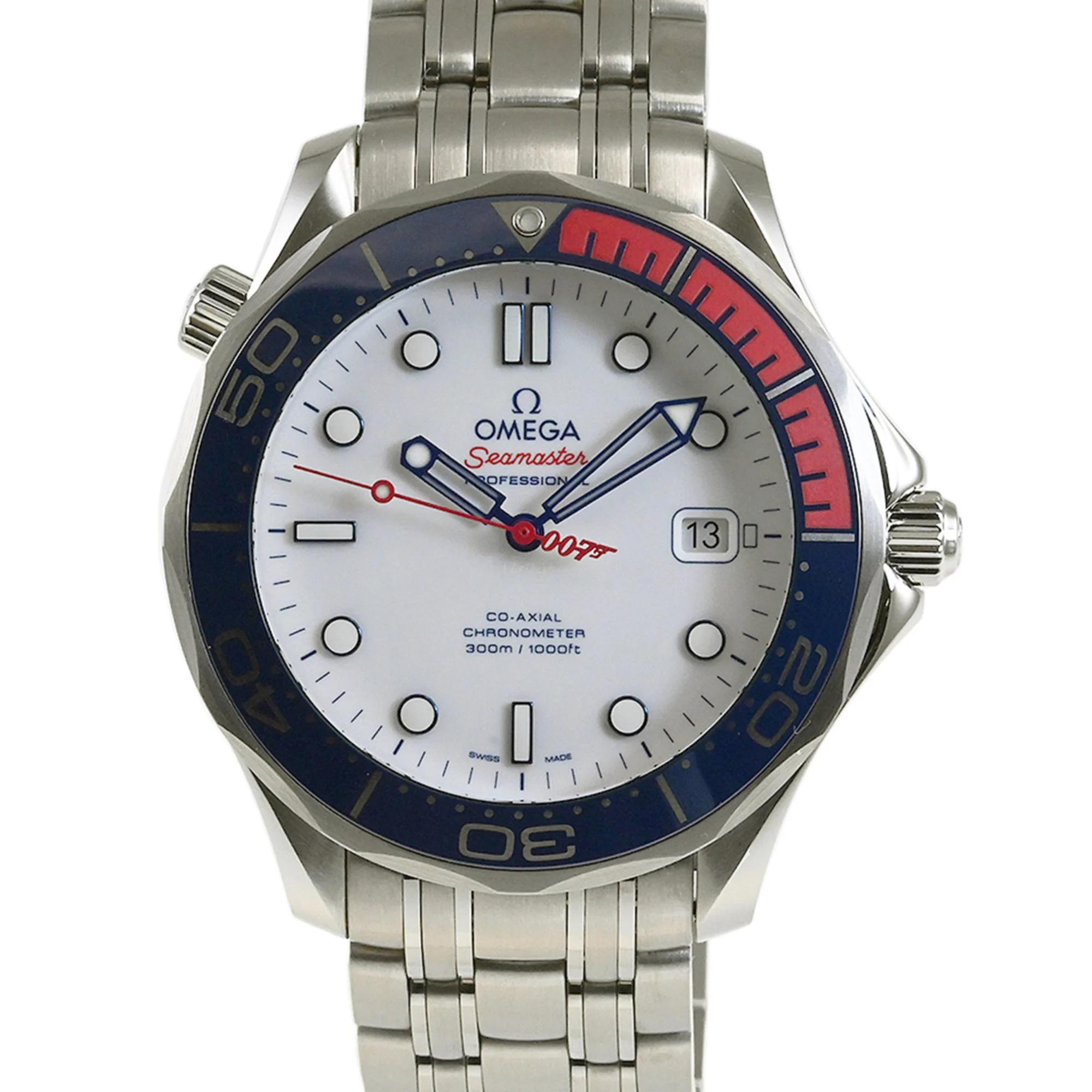
The first watch should be the one you can wear without thinking about it. That means a screw-down crown and genuine water resistance, a case size that sits inside your cuff rather than fighting it, a bracelet or a strap you can swap in a minute, and a dial legible in poor light. Steel, automatic, and from a house with a service network you can actually reach. A Datejust or a Seamaster both fit that brief, in different registers, and both turn up often enough on the pre-owned market that you can be selective about condition rather than grateful for availability.
Buy the first one properly, because it sets the standard for the second. Ask what comes with it. A full set means the watch, its original box, the warranty card or certificate with the serial recorded, and any booklets, tags and spare links. Box and papers are not decoration. The papers tie the watch to a dated first sale, the spare links mean you can size the bracelet without hunting for a replacement, and a service record from an authorised or well-regarded independent watchmaker tells you what has already been replaced. Watches sold without any of that can still be good buys, but the discount should be visible and the seller should be able to explain the gap.
![[USED] ROLEX DATEJUST 36 126233G SILVER JUBILEE×10P DIAMOND Watch](https://chrono6538.com/wp-content/uploads/2026/06/1_000000011376.jpg)
What should the second one do that the first doesn’t?
The second watch earns its place by being different in ways you can name before you buy it. Useful axes of difference: case size, strap material, dial colour, complication, and metal. A thirty-six millimetre watch on leather feels nothing like a forty-two millimetre diver on steel, even from the same maker. A chronograph gives you something to use rather than something to look at. A precious-metal or two-tone case changes what the watch is doing on your wrist entirely.
Write down what the first watch cannot do, then buy against that list. If the everyday watch is a time-and-date diver on a bracelet, the honest gaps are dressier, smaller, softer on the wrist, and something with a second function. A Speedmaster on a leather strap answers most of them at once. If the first watch is already a slim dress piece, the gap runs the other way and you need the robust one.
Does a two-watch collection need a dress watch?
Not necessarily, and this is where a lot of collections go wrong. People buy a thin gold dress watch because a list told them to, wear it twice a year, and resent the money. If your life genuinely includes black-tie evenings and formal daytime events, a dress watch is a working tool and should be bought as one. If it does not, the second slot is better spent on something you will wear weekly.
A middle route works well for most buyers: a smaller, cleaner watch on a good leather strap that reads as dressy without being a specialist. It handles a suit, a wedding and a Tuesday equally, and it does not sit unworn in a drawer developing a stopped mainspring.

How do you avoid buying the same watch twice?
The trap is real and it is easy to fall into, because taste is consistent. You liked a black-dial forty-millimetre steel automatic once, so the next one you like is also a black-dial forty-millimetre steel automatic. Put both watches on the desk and compare four things: case diameter, dial colour, strap or bracelet, and function. If three of the four match, you are buying a spare rather than a second watch.
A blunter version of the same test: imagine getting dressed and having to choose. If there is no occasion on which you would clearly reach for one over the other, they occupy the same slot. Sell one and buy something that fills a gap instead. Steel sports models from the major houses have historically been easier to sell on than precious-metal dress pieces, so a duplicate in that category is usually the easier mistake to unwind.
What about servicing two watches?
Servicing costs double, and that is the honest cost of the second watch. A mechanical watch worn regularly needs its movement stripped, cleaned, lubricated and regulated on a cycle the manufacturer will specify, with gaskets replaced and water resistance retested. Two watches means two of those, and complications generally cost more to service than a time-and-date movement because there is more to dismantle.
Plan for it rather than discovering it. Ask what the maker’s recommended interval is before you buy, ask when the watch was last serviced and by whom, and stagger the two so they do not come due in the same year. Alternating wear helps here as well, since a watch that runs less does not need attention as often. Budgeting for service before the purchase, rather than after the first fault, is the difference between owning two watches and owning one watch and one problem.
![[USED] ROLEX EXPLORER II 216570 RANDOM BLACK MEN S Watch](https://chrono6538.com/wp-content/uploads/2026/06/000000011703_kFCFB4l.jpg)
When is it worth trading up instead of adding?
If the first watch is one you tolerate rather than one you want, trade up before you add. A second watch does not fix a first watch you do not enjoy wearing; it just gives you somewhere to hide from it. The same money spent moving the everyday watch to something you reach for without hesitation buys more wear than a mediocre pair.
Trading up is also the right move when the gap you have identified is a better version of what you own rather than something different. Selling well matters here, and this is where the full set pays: a complete watch with its box, papers and service history is straightforward to move on, while an incomplete one takes longer and invites more questions. Add when the gap is real. Trade when the problem is the watch you already have.