There is a kind of moment a watch holds better than anything else you can own, and it is almost never one anybody else thinks to buy you a present for. The promotion you spent two years working towards. The birthday you decided to properly mark. The morning after something hard finally ended. You buy the watch, you fasten it yourself, and afterwards every glance at your wrist hands the moment back.
Buying pre-owned is what makes it work: the money goes into the piece rather than into being first to wear it, which is how a gold Cartier comes within reach instead of a steel compromise. Everything below comes from our own catalogue, grouped by what each watch is for.
What are you actually marking?
Worth answering before you look at anything. A watch bought at twenty-six to prove to yourself that you can is a different object from the one you buy at forty-five and expect to be wearing at seventy. Both are worth doing, but they are not the same purchase, which is why the groups below run on purpose rather than on price.
The quiet first one
Bulgari‘s steel quartz watches are the most under-rated way into a serious Roman house. Nobody needs to know what you paid. You will know it is a Bvlgari.

Take the Quadrado if you want the watch to read as a bracelet first: square case, small on the wrist, and it slips under a cuff as a round sports watch never does.

The Bvlgari Bvlgari puts the house name twice around the bezel, which sounds loud and is not: engraved into steel on a black dial, it is about as discreet as a signed watch gets.

Solo tempo means time only, and that is the whole idea: no date, no sub-dials, nothing between you and a very clean dial.

The B.zero1 borrows the ridged, tubular look of the B.zero1 ring and pairs it with rubber, so it survives a swim, a gym bag and a summer holiday.
A watch with some character
This is where a watch stops being sensible and starts being a decision: you are buying a shape somebody argued about.

Tambour is French for drum, and the case really is one, sloping outwards from the back to the dial. It sits differently on a wrist from anything else at this level, and it has the busiest dial here, which suits you if you like something to look at.

The 12P is the dressier reading of that same drum case, and the one to choose if the watch has to work at dinner as well as at a desk.
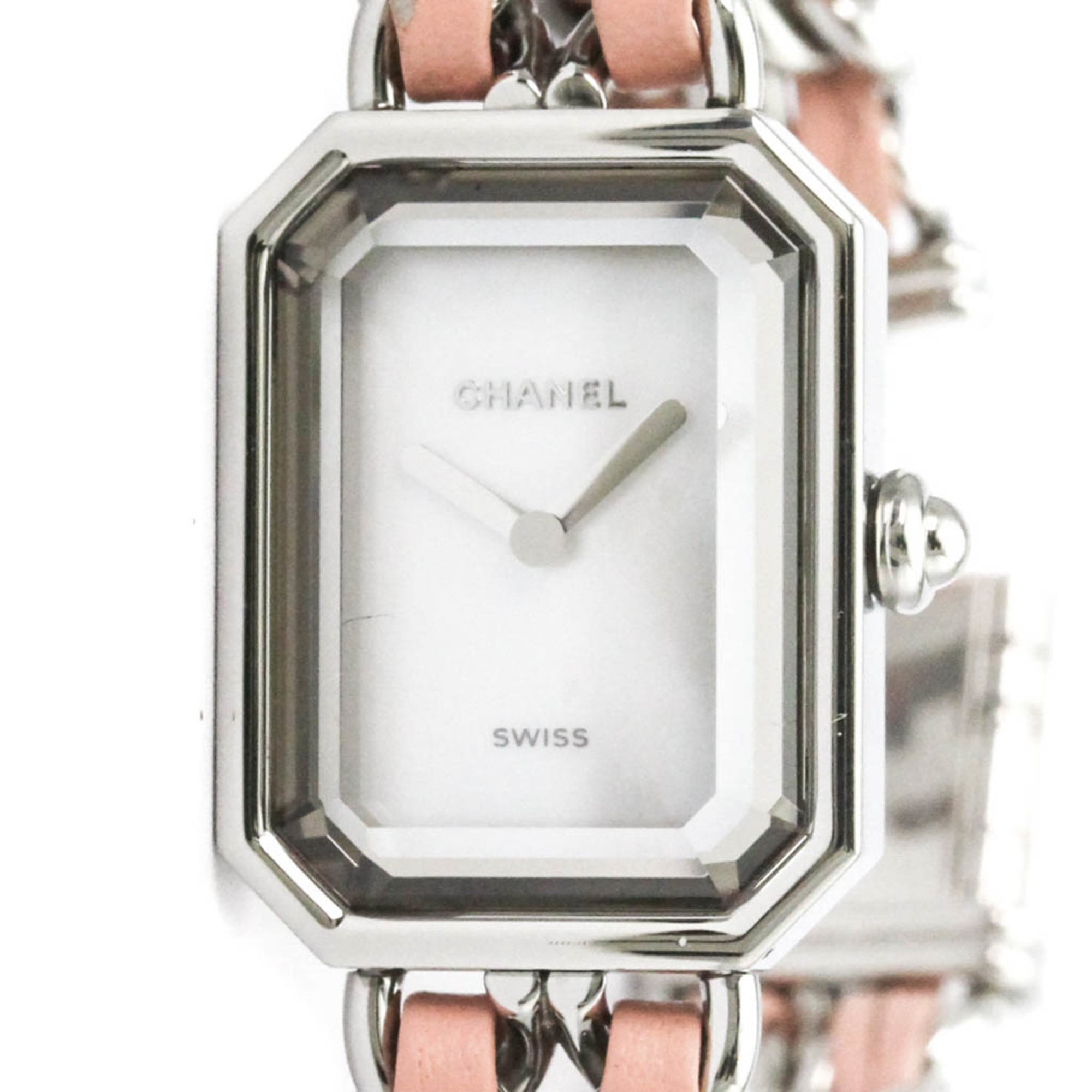
The Première was Chanel‘s first watch, launched in 1987, its octagonal case drawn from the shape of the Place Vendôme and the stopper of the No.5 bottle. Turned slightly inward on the wrist it barely announces itself as a watch at all, which is the point.
The one you keep
Here you are buying gold, ceramic or diamonds, and something you could still be wearing in thirty years.
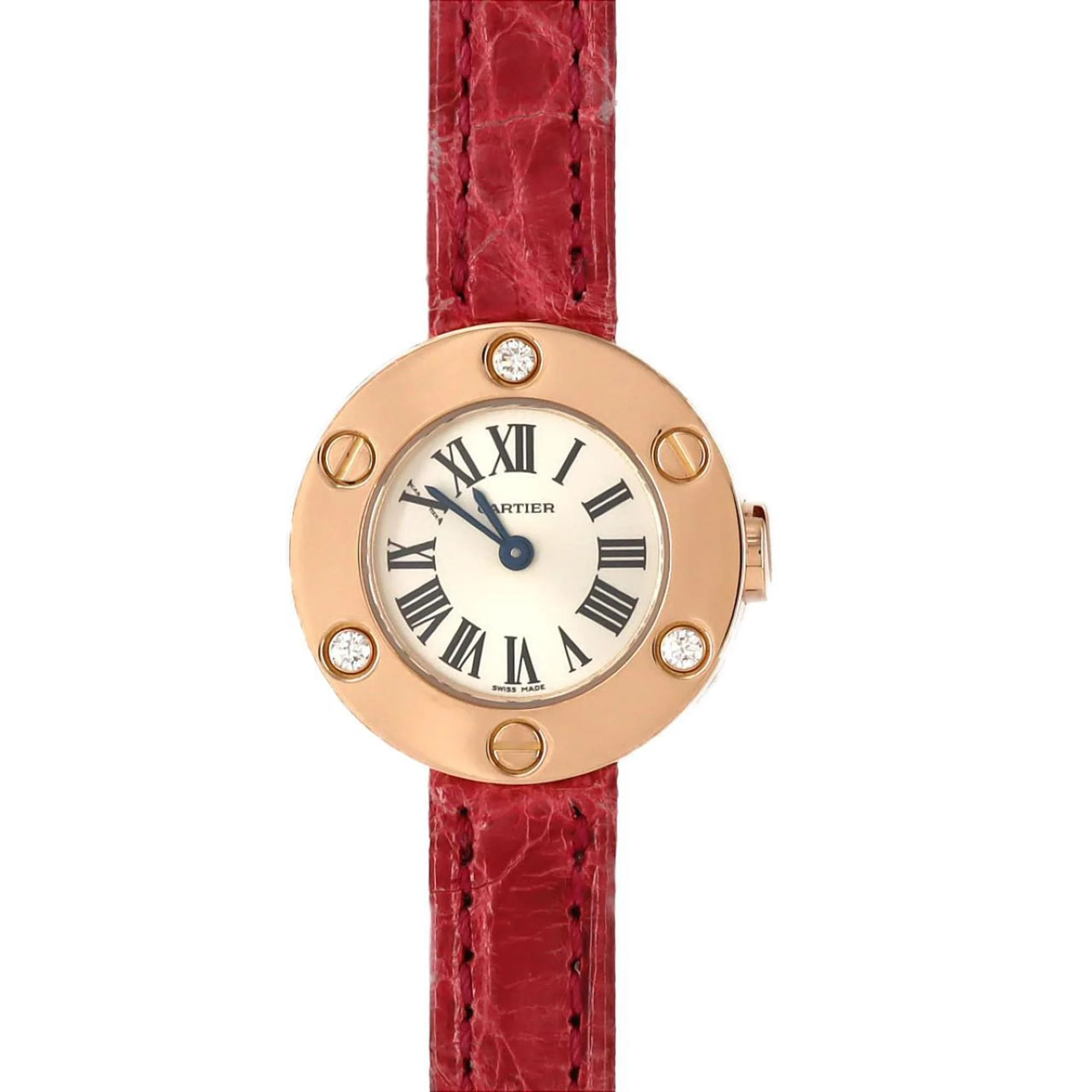
The Cartier Love watch in pink gold with three diamonds carries the screw motif Aldo Cipullo drew for the Love bracelet in 1969, a design about something being fastened on and left on. In pink gold it sits with the gold you already wear instead of fighting it.

Chanel launched the J12 in 2000 in ceramic, which almost nobody was then using for a whole watch. Ceramic is why a twenty-year-old J12 can still look unmarked, and why the black is so absolute. At 33mm it is small enough to wear with everything and big enough to be the thing you notice.
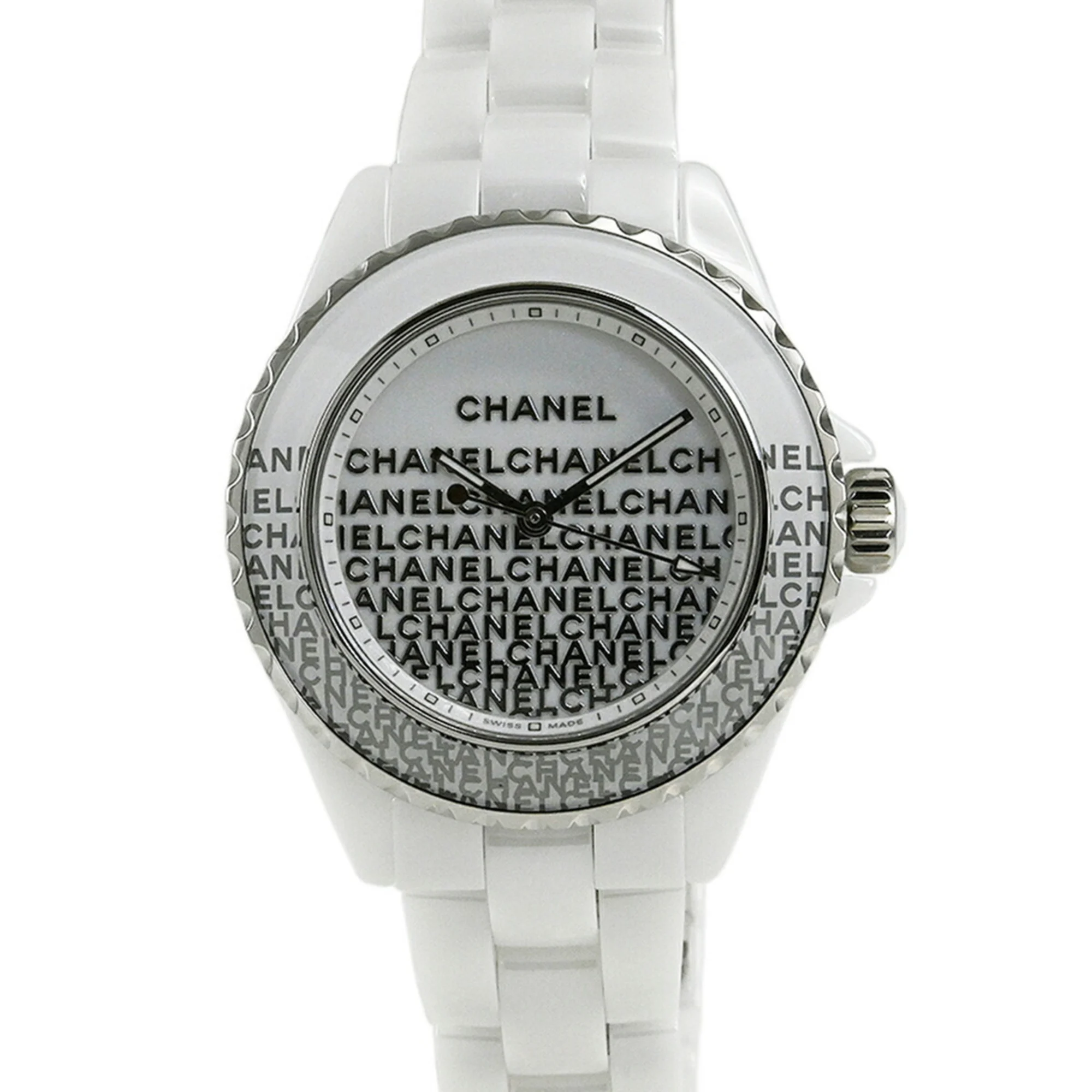
The same reference appears at more than one asking price, because a pre-owned watch is priced as an individual object, not a line item. Compare the two and take the one that looks right.

The diamond bezel is the one if your evenings matter as much as your Mondays. Against black ceramic the stones read as a line of light, not a display.
The milestone

Some things happen once. The company sells. The doctorate is finished. The thing you were told you could not do gets done. The Mademoiselle J12 Acte is a limited edition in ceramic and white gold: a watch you buy knowing exactly which day it stands for, and knowing it will outlast that day by decades.
How do you choose the one that is yours?
- Wrist first. A 33mm ceramic case and a small square steel one behave differently on a slim wrist. Caught between two, the smaller almost always gets worn more.
- Be honest about your week. If most days are laptop and school run, buy the watch that survives them: the rubber-strapped B.zero1, not the diamond bezel.
- Quartz is not a compromise. Several of these run on quartz, so the watch can sit in a drawer for a month and still be right when you pick it up.
- Buy the shape you keep looking back at. Specifications you can research later. The reaction in the first two seconds is the honest one.
Every piece here is authenticated by Chrono6538 before it is listed, so the only question left is whether it suits you. And no occasion is too small. Nobody is going to hand you a watch for getting through a hard year, and nobody should have to. Choose it, wear it, and let it do the remembering.